Archive for the ‘Science’ Category

Famed Roman shipwreck reveals more secrets

Posted: January 6, 2013 by phaedrap1 in News, Science
Tags: ,
Ancient artifacts resembling the Antikythera mechanism, an ancient bronze clockwork astronomical calculator, may rest amid the larger-than-expected Roman shipwreck that yielded the device in 1901.

amphora

(Photo: Ephorate of Culture/Greece)

Marine archaeologists report they have uncovered new secrets of an ancient Roman shipwreck famed for yielding an amazingly sophisticated astronomical calculator. An international survey team says the ship is twice as long as originally thought and contains many more calcified objects amid the ship’s lost cargo that hint at new discoveries.

At the Archaeological Institute of America meeting Friday in Seattle, marine archaeologist Brendan Foley of the Woods Hole (Mass.) Oceanographic Institution, will report on the first survey of Greece’s famed Antikythera island shipwreck since 1976. The ancient Roman shipwreck was lost off the Greek coast around 67 BC,filled with statues and the famed astronomical clock.

“The ship was huge for ancient times,” Foley says. “Divers a century ago just couldn’t conduct this kind of survey but we were surprised when we realized how big it was.”

Completed in October by a small team of divers, the survey traversed the island and the wreck site, perched on a steep undersea slope some 150 to 230 feet deep in the Mediterranean Sea.

The October survey shows the ship was more than 160 feet long, twice as long as expected. Salvaged by the Greek navy and skin divers in 1901, its stern perched too deep for its original skin-diver discoverers to find.

The wreck is best known for yielding a bronze astronomical calculator, the “Antikythera Mechanism” widely seen as the most complex device known from antiquity, along with dozens of marble and bronze statues. The mechanism apparently used 37 gear wheels, a technology reinvented a millennium later, to create a lunar calendar and predict the motion of the planets, which was important knowledge for casting horoscopes and planning festivals in the superstitious ancient world.

A lead anchor recovered in a stowed position in the new survey shows that the ship likely sank unexpectedly when “a storm blew it against an underwater cliff,” says marine archaeologist Theotokis Theodoulou of Greece’s Ephorate (Department) of Underwater Antiquities. “It seems to have settled facing backwards with its stern (rear) at the deepest point,” he says.

Scholars have long debated whether the ship held the plunder of a Roman general returning loot from Greece in the era when the Roman Republic was seizing the reins of the Mediterranean world, or merely luxury goods meant for the newly built villas of the Roman elite. The last survey of the shipwreck was led by undersea explorer Jacques Cousteau, whose documentary Diving for Roman Plunder chronicled that 1976 effort, which appears to have excavated the ship’s kitchen.

The October survey team watched the 1970s documentary to help orient themselves to the wreck site. “They didn’t have the diving technology that we now have to do a very efficient survey,” Theodoulou says.

Along with vase-like amphora vessels, pottery shards and roof tiles, Foley says, the wreck also appears to have “dozens” of calcified objects resembling compacted boulders made out of hardened sand resting atop the amphorae on the sea bottom. Those boulders resemble the Antikythera mechanism before its recovery and restoration. In 2006, an X-ray tomography team reported that the mechanism contained at least 30 hand-cut bronze gears re-creating astronomical cycles useful in horoscopes and timing of the Olympic Games in the ancient world, the most elaborate mechanical device known from antiquity until the Middle Ages. “The (objects) may just be collections of bronze nails, but we won’t know until someone takes a look at them,” Foley says.

The survey effort, headed by Aggeliki Simossi of the Ephorate of Underwater Antiquities,will continue for the next two years. The international survey team will look in two different locales for ancient shipwrecks in that time, while Greek antiquities officials ponder further exploration. An amphora recovered from the wreck will also have its inner walls tested for DNA traces of the regular cargo, such as wine, once carried by the vessel.

Recovery of whatever cargo remains with the wreck, now covered in sand, presents a technically difficult, but not impossible, challenge for marine archaeologists.

“Obviously there are a lot of artifacts still down there, but we will need to be very careful about our next steps. This ship was not a normal one,” Theodoulou says.

Dan Vergano, USA TODAY  January 4, 2013

Modern Science Confirms Yoga’s Many Health Benefits

Posted: December 31, 2012 by phaedrap1 in Science, Spirituality
Tags: ,

Modern science now confirms why humans have been practicing yoga since the beginning of recorded history: it is good both for the body and mind.

There is evidence in the archeological record that yoga has been practiced by humans for at least 5,000 years. Whereas this would constitute sufficient evidence for most folks to consider it a practice with real health benefits, as its millions of practitioners widely claim, skeptics say otherwise. They require any activity deemed to be of therapeutic value run the gauntlet of randomized, controlled clinical trials before it is fully accepted within the conventional medical system.

This tendency towards scientism in medicine, or what some call medical monotheism, runs diametrically opposed to the standards of lived-experience – so called “subjectivity” – or anecdotal experience (learning from the experience of others) which is what the majority of the world uses to determine if something has value, or is worth doing or not.

Yoga, of course, is no longer exclusively practiced by a particular religious group. It is considered a form of low-impact exercise and stress-reduction, and is estimated to be practiced by 20 million people in the US alone.
This burgeoning interest among Westerners happens to be why so much human clinical research has now been performed on yoga. The US National Library of Medicine’s bibliographic database shows that in 1968, seven studies were published on yoga. This year, there have been over 250. So much research, in fact, has accumulated that even systematic reviews of the literature have now been published.

Take a recently published systematic review in the Clinical Journal of Pain where an evaluation of ten randomized controlled trials found patients with chronic low back pain found “short-term effectiveness and moderate evidence for long-term effectiveness of yoga for chronic low back pain.”[i]

The meta-analysis sits comfortably on the top of the pyramid of truth of “evidence-based” medicine. Once confirmation has occurred at these heights, few can accuse such an intervention of “quackery” without indicting the very holy grail of modern medicine itself.

So, what other human clinical research now confirms the value of yoga in the prevention and treatment of disease? We have found evidence supporting the use of yoga in as many as 70 distinct disease categories, all of which can be viewed on our Yoga Health Benefits page, and with 7 listed below:

  1. Type 2 Diabetes: Yoga has been found to reduce blood sugar and drug requirements in patients with type 2 diabetes.[ii] [iii] Additional benefits for type 2 diabetics include the reduction of oxidative stress,[iv] improved cognitive brain function,[v] improving cardiovascular function,[vi] and reducing body mass index, improved well-being and reduced anxiety.[vii]  
  2. Asthma: There are now four clinical studies indicating that yoga practice improves the condition of those with bronchial asthma.[viii] [ix] [x] [xi]  
  3. Elevated Cortisol (Stress): Yoga practice has been found to decrease serum cortisol levels which have been correlated with alpha wave activation.[xii] Yoga also compares favorably in this respect to African dance, the latter of which raises cortisol.[xiii] Women suffering from mental stress, including breast cancer outpatients undergoing adjuvant radiotherapy, have been found to respond to yoga intervention with lowered cortisol levels, as well as associated mental stress and anxiety reduction.[xiv] [xv]  
  4. Fibromyalgia: There are three studies indicating that yoga improves the condition of patients suffering from fibromyalgia.[xvi] [xvii] [xviii]  
  5. High Blood Pressure: Yoga has been found to reduce blood pressure in patients with prehypertension to stage 1 hypertension.[xix] Yoga has also been found to reduce blood pressure in more severe conditions, such as HIV-infected adults with cardiovascular disease.[xx] Yogic breathing is one of the most effective forms of yoga for this health condition, with both fast and slow-breathing exercises having value.[xxi]  
  6. Obsessive-Compulsive Disorder: Yoga has been found to be efficacious in improving obsessive-compulsive behavior.[xxii] [xxiii]  
  7. Computer Eye Strain: Yoga practice reduced visual discomfort in professional computer users.[xxiv]

The examples above, of course, concern very specific health benefits. The experienced health benefits of yoga, on the other hand, are far more numerous and all-encompassing than the reductionist medical model seeking to grant it official recognition and credibility will ever be able to fully grasp.

Nonetheless, it is clear that yoga has come of age. Ancient wisdom is finding renewed confirmation by men and women in lab coats, who themselves could stand to loosen up and throw down a sun salutation or two. Considering the aforementioned “scientific research” available today, they might now be more inclined to do so.

Resources

[i] Holger Cramer, Romy Lauche, Heidemarie Haller, Gustav Dobos. A Systematic Review and Meta-analysis of Yoga for Low Back Pain. Clin J Pain. 2012 Dec 14. Epub 2012 Dec 14. PMID: 23246998

[ii] V V Bulavin, V M Kliuzhev, L M Kliachkin, Lakshmankumar, N D Zuikhin, T N Vlasova. [Elements of yoga therapy in the combined rehabilitation of myocardial infarct patients in the functional recovery period]. Vopr Kurortol Fizioter Lech Fiz Kult. 1993 Jul-Aug(4):7-9. PMID: 8236936

[iii] S Amita, S Prabhakar, I Manoj, S Harminder, T Pavan. Effect of yoga-nidra on blood glucose level in diabetic patients. Indian J Physiol Pharmacol. 2009 Jan-Mar;53(1):97-101. PMID: 19810584

[iv] Shreelaxmi V Hegde, Prabha Adhikari, Shashidhar Kotian, Veena J Pinto, Sydney D’Souza, Vivian D’Souza. Effect of 3-Month Yoga on Oxidative Stress in Type 2 Diabetes With or Without Complications: A controlled clinical trial. Diabetes Care. 2011 Aug 11. Epub 2011 Aug 11. PMID: 21836105

[v] Tenzin Kyizom, Savita Singh, K P Singh, O P Tandon, Rahul Kumar. Effect of pranayama&yoga-asana on cognitive brain functions in type 2 diabetes-P3 event related evoked potential (ERP). Indian J Med Res. 2010 May;131:636-40. PMID: 20516534

[vi] Savita Singh, V Malhotra, K P Singh, S V Madhu, O P Tandon. Role of yoga in modifying certain cardiovascular functions in type 2 diabetic patients. Prog Neuropsychopharmacol Biol Psychiatry. 2002 Jun;26(5):855-60. PMID: 15636309

[vii] Madhu Kosuri, Gumpeny R Sridhar. Yoga practice in diabetes improves physical and psychological outcomes. Metab Syndr Relat Disord. 2009 Dec;7(6):515-7. PMID: 19900155

[viii] R Nagarathna, H R Nagendra. Yoga for bronchial asthma: a controlled study. Br Med J (Clin Res Ed). 1985 Oct 19;291(6502):1077-9. PMID: 3931802

[ix] R Jevning, A F Wilson, J M Davidson. Adrenocortical activity during meditation. Horm Behav. 1978 Feb;10(1):54-60. PMID: 350747

[x] Candy Sodhi, Sheena Singh, P K Dandona. A study of the effect of yoga training on pulmonary functions in patients with bronchial asthma. Indian J Physiol Pharmacol. 2009 Apr-Jun;53(2):169-74. PMID: 20112821

[xi] H R Nagendra, R Nagarathna. An integrated approach of yoga therapy for bronchial asthma: a 3-54-month prospective study. J Asthma. 1986;23(3):123-37. PMID: 3745111

[xii] T Kamei, Y Toriumi, H Kimura, S Ohno, H Kumano, K Kimura. Decrease in serum cortisol during yoga exercise is correlated with alpha wave activation. Percept Mot Skills. 2000 Jun;90(3 Pt 1):1027-32. PMID: 10883793

[xiii] Jeremy West, Christian Otte, Kathleen Geher, Joe Johnson, David C Mohr. Effects of Hatha yoga and African dance on perceived stress, affect, and salivary cortisol. J Vasc Surg. 2001 Sep;34(3):474-81. PMID: 15454358

[xiv] Andreas Michalsen, Paul Grossman, Ayhan Acil, Jost Langhorst, Rainer Lüdtke, Tobias Esch, George B Stefano, Gustav J Dobos. Rapid stress reduction and anxiolysis among distressed women as a consequence of a three-month intensive yoga program. Med Sci Monit. 2005 Dec;11(12):CR555-561. Epub 2005 Nov 24. PMID: 16319785

[xv] H S Vadiraja, Rao M Raghavendra, Raghuram Nagarathna, H R Nagendra, M Rekha, N Vanitha, K S Gopinath, B S Srinath, M S Vishweshwara, Y S Madhavi, B S Ajaikumar, Bilimagga S Ramesh, Rao Nalini, Vinod Kumar. Effects of a yoga program on cortisol rhythm and mood states in early breast cancer patients undergoing adjuvant radiotherapy: a randomized controlled trial. Integr Cancer Ther. 2009 Mar;8(1):37-46. Epub 2009 Feb 3. PMID: 19190034

[xvi] James W Carson, Kimberly M Carson, Kim D Jones, Robert M Bennett, Cheryl L Wright, Scott D Mist. A pilot randomized controlled trial of the Yoga of Awareness program in the management of fibromyalgia. Pain. 2010 Nov;151(2):530-9. PMID: 20946990

[xvii] Kathryn Curtis, Anna Osadchuk, Joel Katz. An eight-week yoga intervention is associated with improvements in pain, psychological functioning and mindfulness, and changes in cortisol levels in women with fibromyalgia. J Pain Res. 2011 ;4:189-201. Epub 2011 Jul 26. PMID: 21887116

[xviii] Gerson D da Silva, Geraldo Lorenzi-Filho, Lais V Lage. Effects of yoga and the addition of Tui Na in patients with fibromyalgia. J Altern Complement Med. 2007 Dec;13(10):1107-13. PMID: 18166122

[xix] Debbie L Cohen, Leanne T Bloedon, Rand L Rothman, John T Farrar, Mary Lou Galantino, Sheri Volger, Christine Mayor, Phillipe O Szapary, Raymond R Townsend . Iyengar Yoga versus Enhanced Usual Care on Blood Pressure in Patients with Prehypertension to Stage I Hypertension: a Randomized Controlled Trial. Evid Based Complement Alternat Med. 2009 Sep 4. Epub 2009 Sep 4. PMID: 19734256

[xx] W T Cade, D N Reeds, K E Mondy, E T Overton, J Grassino, S Tucker, C Bopp, E Laciny, S Hubert, S Lassa-Claxton, K E Yarasheski. Yoga lifestyle intervention reduces blood pressure in HIV-infected adults with cardiovascular disease risk factors. HIV Med. 2010 Jan 5. Epub 2010 Jan 5. PMID: 20059570

[xxi] Monika Mourya, Aarti Sood Mahajan, Narinder Pal Singh, Ajay K Jain. Effect of slow- and fast-breathing exercises on autonomic functions in patients with essential hypertension. J Altern Complement Med. 2009 Jul;15(7):711-7. PMID: 19534616

[xxii] D S Shannahoff-Khalsa, L R Beckett. Clinical case report: efficacy of yogic techniques in the treatment of obsessive compulsive disorders. Int J Neurosci. 1996 Mar;85(1-2):1-17. PMID: 8727678

[xxiii] D S Shannahoff-Khalsa, L E Ray, S Levine, C C Gallen, B J Schwartz, J J Sidorowich. Randomized controlled trial of yogic meditation techniques for patients with obsessive-compulsive disorder. CNS Spectr. 1999 Dec;4(12):34-47. PMID: 18311106

[xxiv] Shirley Telles, K V Naveen, Manoj Dash, Rajendra Deginal, N K Manjunath. Effect of yoga on self-rated visual discomfort in computer users. Head Face Med. 2006;2:46. Epub 2006 Dec 3. PMID: 17140457

Source: GreenMedInfo.com

Amazing Phenomenon Of Singing Plants

Posted: December 30, 2012 by phaedrap1 in Science, Spirituality
Tags:

Plants are very much alive. Not only do they dislike human noise but they also posses the capacity to learn and communicate.

Perhaps even more astonishing is that plants can also make music.

Have you ever heard the incredible music of the plants? No? Are you waiting for an invitation? Find some cheap airline tickets, hop on a plane and fly down to hear the wonderful sounds these plants can make.

Plants can actually sing and compose music and listening to it is truly beautiful and relaxing!

Ever since 1975, researchers at Damanhur, in northern Italy have been experimenting with plants, trying to lean more about their unique properties.

Researchers use devices which they have created to measure the re-activity of the plants to their environment. The devices judge the plants’ capacity to learn and communicate.

Using a simple principle, the researchers used a variation of the Wheatstone bridge, an electrical circuit used to measure an unknown electrical resistance by balancing two legs of a bridge circuit, one leg of which includes the unknown component.

Music of the plants is beautiful and relaxing.
This device has 3 fixed resistances and 1 variable one. Electrical differences between the leaves and the roots of the plant are measured. These differences can then be translated into a variety of effects, including music, turning on lights, movement and many others.

There is no danger to the plants as the researchers use very low intensity electrical currents.

Researchers state that every living creature whether animal or plant, produces variations of electrical potential, depending on the emotions being experienced at the time.

The music starts at around 2:11. Credit: www.damanhur.org


The plant send impulses to the midi-instruments.
The midi-signal goes to a midi-thru-box and from there to the software

The device that takes the measurements is a tool from damanhur called U1.


The plants have the most sensitive variations when they signal the arrival of the person who cares for them, when being watered, when spoken to, during the creation of music, etc.Sensations felt within the plant induce a physiological reaction, which then expresses itself in electrical, conductive and resistance variations.

These variations can be translated in different ways, including into musical scales.

The experiments have shown that plants definitely appear to enjoy learning to use musical scales and also making their own music with the use of a synthesizer.


Although there is currently little scientific research conducted on this subject, one cannot deny that listen to these beautiful plants is a joy for the soul.

Messagetoeagle.com

The Electric World

Posted: December 30, 2012 by phaedrap1 in Science, Spirituality, videos
Tags:

2,750-year-old temple discovered in Israel

Posted: December 27, 2012 by phaedrap1 in Monuments, Science
Tags: ,


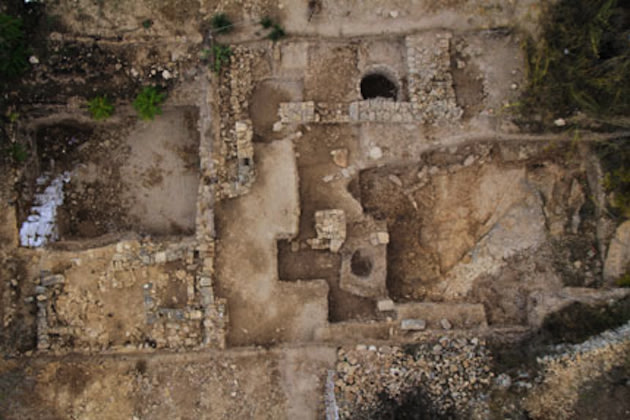
An overhead view of the excavation site (Skyview/Israeli Antiquities Authority)Israeli archeologists have discovered the remains of an ancient temple that is nearly 3,000 years old and was once home to a ritual cult.

“The ritual building at Tel Motza is an unusual and striking find, in light of the fact that there are hardly any remains of ritual buildings of the period in Judaea at the time of the First Temple,” excavation directors Anna Eirikh, Hamoudi Khalaily and Shua Kisilevitz said in a statement released by the Israeli Ministry of Foreign Affairs.

The temple remains were discovered at the Tel Motza site, located to the west of Jerusalem. The Israeli Antiquities Authority has been conducting excavation efforts at the site and says that along with the temple remains itself, the findings include a “cache of sacred vessels” estimated to be 2,750 years old.

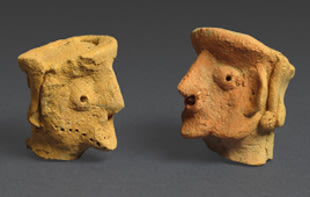
“Among other finds, the site has yielded pottery figurines of men, one of them bearded, whose significance is still unknown,” the statement from Khalaily and Kisilevitz reads.

NBC’s Cosmic Log notes that the discovery was made during preparations for a new section of Israel’s Highway 1. Because of the number of historical sites and artifacts in and near Jerusalem, the Israeli government typically conducts similar archeological excavation efforts before beginning construction on major infrastructure projects.

Two head figurines discovered at the 2,750-year-old site (Clara Amit, courtesy Israel Antiquities Authority)Dating back to the Iron Age, the temple was designed in accordance with similar layouts for other religious buildings from that era, according to the Israeli government. More from its analysis:

“The walls of the structure are massive, and it includes a wide, east-facing entrance, conforming to the tradition of temple construction in the ancient Near East: The rays of the sun rising in the east would have illuminated the object placed inside the temple first, symbolizing the divine presence within. A square structure which was probably an altar was exposed in the temple courtyard, and the cache of sacred vessels was found near the structure.”

The excavation directors said they will continue to examine the findings and conduct further digs while preparations for the highway construction continue.

“The find of the sacred structure, together with the accompanying cache of sacred vessels, and especially the significant coastal influence evident in the anthropomorphic figurines, still require extensive research,” they said.

Eric Pfeiffer  Yahoo News

 The fate of Ramesses III has long been the subject of debate among Egyptologists.

Recently, a team of researchers, led by Dr Albert Zink from the Institute for Mummies and the Iceman of the European Academy of Bolzano/Bozen in Italy, analyzed the mummies of Ramesses III the second ruler of Egypt’s 20th Dynasty, and the last of great pharaohs on the throne and unknown man E, the suspected son of the king.

Ramesses III’s reign (probably from 1186 to 1155 BC) was a time of considerable turmoil throughout the Mediterranean that saw the Trojan War, the fall of Mycenae and a great surge of displaced people from all over the region that was to wreak havoc; even toppling some empires.


Ancient papyrus trial documents mention an attempt on the pharaoh’s life in 1155 BC.

Apparently, members of his harem and several people in high positions in the pharaoh’s government were involved a palace coup.


The conspiracy was led by Tiye, one of his two known wives, and her son Prince Pentawere, over who would inherit the throne, but it is not clear whether the plot was successful or not.

Recent CT scans of Ramesses III revealed a wide and deep wound in the throat of the king’s mummy.

According to researchers, the deadly wound caused by a sharp blade and hidden by the bandages, probably caused immediate death of the king.

The neck was covered by a collar of thick linen layers.

Analysis of unknown man E revealed an age of 18-20 years, while an inflated thorax and compressed skinfolds around the neck of the mummy suggests violent actions that led to death, such as strangulation.


Additionally, the body was not mummified in the usual way – and was covered with a “ritually impure” goatskin – which the authors say could be interpreted as evidence for a punishment in the form of a non-royal burial procedure.

A Horus eye amulet was also found inside the wound, most probably inserted by the ancient Egyptian embalmers during the mummification process to promote healing.


Another mummy that belongs to unknown man E, has unusual marks around the neck, and could be Prince Pentawere, that may have been forced to kill himself as a punishment for the conspiracy.

The cause of death “has to remain a matter of speculation.”

Finally, DNA analysis revealed that the mummies share the same parental lineage, “strongly suggesting that they were father and son,” researchers say.

“Before now we knew more or less nothing about the destiny of Ramesses III. People had examined his body before and had done radiographs but they didn’t notice any trauma. They did not have access to the CT scans that we do,” Dr Albert Zink, palaeopathologist of the EURAC Institute for Mummies and the Iceman in Italy, said.

“We were very surprised by what we found. We still cannot be sure that the cut killed him, but we think it did.

“It might have been made by the embalmers but this is very unlikely. I’m not aware of any other examples of this.”

The body was not mummified in the usual way – and was covered with a “ritually impure” goatskin – which might have been an ancient punishment in the form of a non-royal burial procedure.

“He was badly treated for a mummy,” said Dr Zink.

© MessageToEagle.com

In the early 1900s, an archaeologist, William Mills, dug up a treasure-trove of carved stone pipes that had been buried almost 2,000 years earlier.

Mills was the first to dig the Native American site, called Tremper Mound, in southern Ohio. And when he inspected the pipes, he made a reasonable – but untested – assumption. The pipes looked as if they had been carved from local stone, and so he said they were. That assumption, first published in 1916, has been repeated in scientific publications to this day. But according to a new analysis, Mills was wrong.

In a new study, the first to actually test the stone pipes and pipestone from quarries across the upper Midwest, researchers conclude that those who buried the pipes in Tremper Mound got most of their pipestone – and perhaps even the finished, carved pipes – from Illinois.

The researchers spent nearly a decade on the new research. They first collected the mineralogical signatures of stone found in traditional pipestone quarries in Illinois, Kansas, Michigan, Minnesota, Missouri and Ohio. Then they compared the material found in those quarries to the mineralogical makeup of the artifacts left behind by the people of Tremper Mound.

Less than 20 percent of the 111 Tremper Mound pipes they tested were made from local Ohio stone. About 65 percent were carved from flint clay found only in northern Illinois and 18 percent were made of a stone called catlinite – from Minnesota.

The researchers are still puzzling over how most of these materials made it to Ohio from Illinois, and are baffled by another new discovery.Pipes from a site only about 40 miles north of Tremper Mound, an elaborate cluster of immense mounds known as Mound City, were carved almost entirely from local stone.Mound City was inhabited at about the same time or shortly after Tremper Mound, and the pipes found there are stylistically very similar to the Tremper pipes.

The researchers describe their findings in a paper in American Antiquity.

These results should remind archaeologists that things are not as simple as they sometimes appear, said Thomas Emerson, the principal investigator on the study and the director of the Illinois State Archaeological Survey (ISAS) at the University of Illinois.

“This is how mythology becomes encased in science,” he said.

The study also confirms that the people who produced these pipestone artifacts, known today as members of the Hopewell tradition, were more diverse and varied in their cultural practices than scientists once appreciated, Emerson said.

Photo by L. Brian Stauffer

The Hopewell people, who lived in the region from about 100 B.C. to roughly A.D. 400, have long been the subject of speculation, as the artifacts they left behind and the manner in which these goods were disposed of are not easily understood. Those living in southeastern Ohio, especially, seemed to be “conspicuous consumers and connoisseurs of the exotic,” Emerson said.

Photo by L. Brian Stauffer

The Hopewell people from that area collected “massive assemblages of obsidian from Wyoming, mica from the Appalachians, and caches of elaborately carved pipes, ” Emerson said. They also collected shells from the Gulf Coast, along with the skulls of exotic animals (an alligator, for instance).

Photo by L. Brian Stauffer

“Strange animals, strange minerals, strange things were really a focus,” he said.

Most of the carved stone pipes from that era have been found in Ohio, where very large caches often containing more than 100 pipes were ritually broken, burned and buried, Emerson said. The same style of pipes are found in Illinois, but many fewer have been uncovered in Illinois to date, he said, and they are dispersed, not heaped together in giant hordes as in Ohio.

There is evidence of stone carving at the Illinois sources where the stone was gathered, but none at Tremper Mound, suggesting that the Illinois stone was carved into pipes before it was transported to Ohio.

The team used a variety of techniques to analyze the material in the quarries and the artifacts. One method, called X-ray diffraction (XRD), produces a distinct signal that reflects the proportion of minerals in different types of stone. The stone must be pulverized, however, to subject it to XRD.

Photo by L. Brian Stauffer

Photo by L. Brian Stauffer

Photo by L. Brian Stauffer

Location where the owl pipes were discovered.

To analyze the intact pipes, the researchers used a non-destructive portable technology, called PIMA, which illuminates a specimen with short-wavelength infrared radiation and records the refracted (unabsorbed) wavelengths, allowing investigators to identify the minerals present. They verified the accuracy of the PIMA by comparing its results to those obtained with XRD on quarry specimens and broken pipes.

The new findings should challenge archaeologists to look more carefully at the evidence left behind by the Hopewell people, Emerson said.

“This study really says to the archaeological community, you need to go back to the drawing board,” he said. “You’ve been telling stories for decades that are based on essentially misinformation.”

© MessageToEagle.com

Rudolph WAS lit — and Santa was taking magic mushrooms!

Posted: December 21, 2012 by phaedrap1 in News, Science
Flying reindeer? Theory calls St. Nick modern counterpart of shaman — on hallucinogenics
Image: FINLAND-CHRISTMAS-SANTA CLAUS

Olivier Morin  /  AFP / Getty Images

Santa Claus — hopefully without the assistance of hallucinogens — prepares his reindeer and sled in Rovaniemi, Finland, on Dec. 16, 2008. Rovaniemi’s Christmas theme park gets into full swing during the holidays, teeming mainly with families with children eager to meet Santa and his elves.
By Douglas Main
This Christmas, like many before it and many yet to come, the story of Santa and his flying reindeer will be told, including how the “jolly old elf” flies on his sleigh throughout the entire world in one night, giving gifts to all the good children.

But according to one theory, the story of Santa and his flying reindeer can be traced to an unlikely source: hallucinogenic or “magic” mushrooms.

“Santa is a modern counterpart of a shaman, who consumed mind-altering plants and fungi to commune with the spirit world,” said John Rush, an anthropologist and instructor at Sierra College in Rocklin, Calif.

According to the theory, the legend of Santa derives from shamans in the Siberian and Arctic regions who dropped into locals’ teepeelike homes with a bag full of hallucinatory mushrooms as presents in late December, Rush said.

“As the story goes, up until a few hundred years ago these practicing shamans or priests connected to the older traditions would collect Amanita muscaria (the Holy Mushroom), dry them, and then give them as gifts on the winter solstice,” Rush told LiveScience. “Because snow is usually blocking doors, there was an opening in the roof through which people entered and exited, thus the chimney story.”

But that’s just the beginning of the symbolic connections between the Amanita muscaria mushroom and the iconography of Christmas, according to several historians and ethnomycologists, or people who study the influence fungi has had on human societies. Of course, not all scientists agree that the Santa story is tied to a hallucinogen. [ Tales of Magic Mushrooms & Other Hallucinogens ]

Presents under the tree
In his book “ Mushrooms and Mankind ” (The Book Tree, 2003) the late author James Arthur points out that Amanita muscaria, also known as fly agaric, lives throughout the Northern Hemisphere under conifers and birch trees, with which the fungi —which is deep red with white flecks — has a symbiotic relationship. This partially explains the practice of the Christmas tree, and the placement of bright red-and-white presents underneath, which look like Amanita mushrooms, he wrote.

“Why do people bring pine trees into their houses at the Winter Solstice, placing brightly colored (red and white) packages under their boughs, as gifts to show their love for each other … ?” he wrote. “It is because, underneath the pine bough is the exact location where one would find this ‘Most Sacred’ substance, the Amanita muscaria, in the wild.”

Reindeer are common in Siberia, and seek out these hallucinogenic fungi, as the area’s human inhabitants have been known to do. Donald Pfister, a biologist who studies fungi at Harvard University, suggests that Siberian tribesmen who ingested fly agaric may have hallucinated into thinking that reindeer were flying.

“Flying” reindeer
“At first glance, one thinks it’s ridiculous, but it’s not,” said Carl Ruck, a professor of classics at Boston University. “Whoever heard of reindeer flying? I think it’s becoming general knowledge that Santa is taking a ‘trip’ with his reindeer,” Ruck said. [ 6 Surprising Facts About Reindeer ]

“Amongst the Siberian shamans, you have an animal spirit you can journey with in your vision quest,” Ruck continued. ” And reindeer are common and familiar to people in eastern Siberia. They also have a tradition of dressing up like the (mushroom) … they dress up in red suits with white spots.”

Ornaments shaped like Amanita mushrooms and other depictions of the fungi are also prevalent in Christmas decorations throughout the world, particularly in Scandinavia and northern Europe, Pfister points out. That said, Pfister made it clear that the connection between modern-day Christmas and the ancestral practice of eating mushrooms is a coincidence, and he doesn’t know about any direct link.

Many of these traditions were merged or projected upon Saint Nicholas, a fourth-century saint who was known for his generosity, as the story goes.

The Santa connection
There is little debate about the consumption of mushrooms by Arctic and Siberian tribes’ people and shamans, but the connection to Christmas traditions is more tenuous, or “mysterious,” as Ruck put it.

Many of the modern details of the modern-day American Santa Claus come from “A Visit from St. Nicholas” (which later became famous as “‘Twas the Night Before Christmas”), an 1823 poem credited to Clement Clarke Moore, an aristocratic academic who lived in New York City.

The origins of Moore’s vision are unclear, although Arthur, Rush and Ruck all think he probably drew from northern Europe motifs that derive from Siberian or Arctic shamanic traditions. At the very least, Arthur wrote, Santa’s sleigh and reindeer are references back to various related Northern European mythology. For example, the Norse god Thor (known in German as “Donner”) flew in a chariot drawn by two goats, which have been replaced in the modern retelling by Santa’s reindeer, Arthur wrote.

Ruck points to Rudolf as another example of the mushroom imagery resurfacing: his nose looks exactly like a red mushroom, he said.  “It’s amazing that a reindeer with a red-mushroom nose is at the head, leading the others.”

Some doubt
Other historians were unaware of a connection between Santa and shamans or magic mushrooms, including Stephen Nissenbaum, who wrote a book about the origins of Christmas traditions, and Penne Restad, at the University of Texas.

One historian, Ronald Hutton, told NPR that the theory of a mushroom-Santa connection is off-base. “If you look at the evidence of Siberian shamanism, which I’ve done,” Hutton said, “you find that shamans didn’t travel by sleigh, didn’t usually deal with reindeer spirits, very rarely took the mushrooms to get trances, didn’t have red-and-white clothes.”

But Rush and Ruck say these statements are incorrect; shamans did deal with reindeer spirits, and the depiction of their clothes’ coloring has more to do with the colors of the mushroom than the shamans’ actual garb. As for sleighs, the point isn’t the exact mode of travel, but that the “trip” involves transportation to a different, celestial realm, Rush said.

“People who know about shamanism accept this story,” Ruck said. “Is there any other reason that Santa lives in the North Pole? It is a tradition that can be traced back to Siberia.”

Brett Smith for redOrbit.com – Your Universe Online

Based on an in-depth analysis of two ancient Egyptian mummies, an international team of Egyptologists have uncovered a series of clues that may have solved a 3,000-year-old murder mystery.

According to the team’s report in the British Medical Journal, Pharaoh Ramesses III was likely killed by conspirators during an attempted coup around 1155 B.C., confirming reports found in an ancient text known as the Judicial Papyrus of Turin.

“This study gives clues to the authenticity of the historically described harem conspiracy surrounding Ramesses III, and finally reveals its tragic outcome,” the researchers wrote in their report.

In their investigation, the scientists performed a detailed inspection of the two mummies’ morphology to assess preservation of the specimens and to record signs of either injuries or postmortem damage. Their analysis was based on information gathered using computed tomography (CT) scans and both an anthropological and forensic analysis.

The Egyptologists also took bone samples from different sections of the mummies and transferred them into sterile tubes. A genetic analysis was then performed in a laboratory in the Egyptian Museum in Cairo and also in a second laboratory at Cairo University to investigate a possible family relationship between Ramesses III and a mummy recovered alongside the pharaoh, referred to as “unknown man E.”

The CT analysis of Ramesses III showed a wide and deep cut to the throat of the mummy. The scientists speculated it was caused by a sharp blade and might have spelled immediate death for the recipient.

The scan also revealed the presence of a Horus eye amulet just inside the wound. This was most likely inserted by the ancient embalmers as a ceremonial part of the mummification process, the research team said. They also noted the neck was unusually wrapped by a collar of thick linens.

The forensic analysis of unknown man E showed him to be between 18-20 years old. An inflated thorax and compacted layers of skin around the neck of the mummy pointed to a violent action, like strangulation, which probably led to his death, the authors wrote.

The experts also noticed the unknown man’s mummy was covered with a “ritually impure” goatskin—a signifier that he could have been punished via a non-royal burial procedure.

The genetic analysis of the mummies showed that Ramesses III and unknown man E shared a paternal lineage and certain genetic markers strongly suggested they were father and son. The analysis was unable to differentiate among the several sons of Ramesses III.

Being able to identify the unknown man’s mummy as Ramesses’ son, Pentawere, would have been crucial to unlocking the ancient mystery as he was the only son who revolted against his father during the coup, according to the papyrus text. The documents said Pentawere was found guilty at trial, and then took his own life.

Unfortunately, the Egyptologists were unable to close the book on the so-called ‘harem conspiracy’ that attempted to remove Ramesses from power. The Judicial Papyrus refers to Ramesses III as “the Great God,” and suggests he died before or during the trials. However, the texts also say the court received direct orders from the god-king, who would have had to survive the original attack.

Some Nazca Lines are a Labyrinth, New Study Shows

Posted: December 10, 2012 by phaedrap1 in News, Science
Tags: ,

A five-year study by British archaeologists sheds new light on the enigmatic drawings created by the Nazca people between 100 BC and CE 700 in the Peruvian desert.

This aerial view shows the southern part of the Nazca labyrinth, including the central mound and the spiral that marks the outer end (Clive Ruggles)

The Nazca Lines are located in the arid Peruvian coastal plain some 250 miles south of Lima. They have attracted a host of theories purporting to explain them ever since they were discovered during the 1920s – notably the bizarre ideas of Erich Von Daniken who supposed they were made by visiting extra-terrestrials.

British archaeologists Dr Nicholas Saunders of the University of Bristol and Prof Clive Ruggles of the University of Leicester combined the experience and knowledge gained by walking the lines (they walked more than 900 miles of desert in southern Peru, tracing the lines and geometric figures), studying the layers of superimposed designs, photographing the associated pottery and using satellite digital mapping into the most detailed such study to date. The results have been published in the journal Antiquity.

In the midst of the study area is a unique labyrinth originally discovered by Prof Ruggles when he spent a few days on the Nazca desert back in 1984. Its existence came as a complete surprise.

“When I set out along the labyrinth from its center, I didn’t have the slightest idea of its true nature,” Prof Ruggles explained. “Only gradually did I realize that here was a figure set out on a huge scale and still traceable, that it was clearly intended for walking, and that I was almost certainly the first person to have recognized it for what it was, and walked it from end to end, for some 1500 years. Factors beyond my control brought the 1984 expedition to an abrupt halt and it was only 20 years later that I eventually had the opportunity to return to Nazca, relocate the figure and study it fully.”

Invisible in its entirety to the naked eye, the only way of knowing its existence is to walk its 2.7 miles (4.4 km) length through disorienting direction changes which ended, or began, inside a spiral formation.

“The labyrinth is completely hidden in the landscape, which is flat and virtually featureless. As you walk it, only the path stretching ahead of you is visible at any given point. Similarly, if you map it from the air its form makes no sense at all.”

“But if you walk it, discovering it as you go, you have a set of experiences that in many respects would have been the same for anyone walking it in the past. The ancient Nazca peoples created the geoglyphs, and used them, by walking on the ground. Sharing some of those experiences by walking the lines ourselves is an important source of information that complements the hard scientific and archaeological evidence and can really aid our attempts to make anthropological sense of it.”

The arid conditions have ensured the remarkable preservation of Nazca’s fragile geoglyphs for a millennium and a half. Nonetheless, segments of nearly all of the lines and figures – including the labyrinth – have been washed away by flash floods that occurred from time to time in the past. And, of course, people through the ages have walked across the desert plateau to cross from one valley to another.

The archaeologists have studied the integrity of many lines and figures within the study area.

“Meandering and well-worn trans-desert pathways served functional purposes but they are quite different from the arrow-straight lines and geometric shapes which seem more likely to have had a spiritual and ritual purpose. It may be, we suggest, that the real importance of some of these desert drawings was in their creation rather than any subsequent physical use,” Dr Saunders said.

This ground shot is taken along the innermost pathway of the labyrinth directly towards the central mound. This line widens out towards its terminus, creating a false perspective that makes it appear parallel as it stretches away into the distance (Clive Ruggles)

Certainly, the pristine state and well-preserved edges of the labyrinth suggest that it was never walked by more than a few people in single file. In fact, the survival of many geoglyphs seems remarkable given the proximity of the area to the pilgrimage center of Cahuachi, in the nearby Nazca valley, and the fact that people carried on walking across the pampa during the ensuing centuries right up to modern times.

Even if the labyrinth was not unique when it was built, it may well be the only such construction whose integrity has been preserved to the extent that it still can be recognized in today’s landscape.

“Excavations commonly uncover objects undisturbed for centuries and even millennia. But it is hard to conceive many places on the planet were you could still discover a human construction that has lain hidden on the surface of the ground for as long as 1500 years, simply by walking along it and seeing where your feet take you,” Prof Ruggles said.

_______

Bibliographic information: Clive Ruggles and Nicholas J. Saunders. 2012. Desert labyrinth: lines, landscape and meaning at Nazca, Peru. Antiquity, vol. 86, no. 334, pp. 1126–1140

Published: Dec 10th, 2012