Archive for the ‘Science’ Category

  • Glass necklace discovered inside 2,400-year-old burial mound
  • Jewellery thought to have belonged to a 25-year-old virgin priestess
  • Experts want to pinpoint precise origin of priceless beads

Extraordinary brightly-coloured glass jewellery believed to be from Ancient Egypt has been found in a 2,400-year-old burial mound in Siberia.

Nicknamed ‘Cleopatra’s Necklace’ by the Russians who found it, the jewellery was discovered on the skeleton of a 25-year-old woman, believed to have been a virgin priestess.

Although it was discovered during a dig nine years ago, this is the first time a picture of the priceless 17-bead necklace has been shown since it was found in the Altai Mountains by archaeologist Yelena Borodovskya.

Rare find: The necklace was discovered around the neck of a skeleton in a 24,000-year-old burial moundRare find: The necklace was discovered around the neck of a skeleton in a 24,000-year-old burial mound


Valued: The intricate beads are believed to have belonged to a 25-year-old virgin priestessValued: The intricate beads are believed to have belonged to a 25-year-old virgin priestess


Intricate: The beads were created using the 'Millefiori technique' where glass canes or rods are combined to produce multicoloured patternsIntricate: The beads were created using the ‘Millefiori technique’ where glass canes or rods are combined to produce multicoloured patterns

Siberian academics have released the images in the hope of finding experts from across the world who may be able to pinpoint the necklace’s exact origin.

 ‘It has a striking variety of colours, beautiful shades of deep and light yellow and blue, said Professor Andrey Borodovsky, 53, of the Institute of Archeology and Ethnography, Novosibirsk.

‘I have worked with Altai antiquities for more than 30 years, and this necklace is probably the most beautiful find I’ve ever seen.’

Discovery: The precious necklace was found by archeologist Yelena Borodovskaya in the Altai mountains of SiberiaDiscovery: The precious necklace was found by archeologist Yelena Borodovskaya in the Altai mountains


Investigating: Professor Andrey Borodovsky is keen to discover how the necklace came to SiberiaInvestigating: Professor Andrey Borodovsky is keen to discover how the necklace came to Siberia

Professor Borodovsky said that the intricate beads were made using the ‘Millefiori technique’, which involves production of glass canes or rods with multicoloured patterns that can only be seen from the cut ends.

It is believed that the jewellery pre-dates Egyptian queen Cleopatra, who died in 30BC, but Professor Borodovsky wants to find experts to help him date the piece, according to the Siberian Times.

The owner of the necklace was believed to have been 25-years-old when she was buried with the beads around her neck.

Unusual: Professor Borodovsky, pictured left, said the skeleton was also found with a bronze mirrorUnusual: Professor Borodovsky, pictured left, said the skeleton was also found with a bronze mirror

She was believed to have been a ‘blue-blooded’ woman, who was likely to have come from a highly regarded tribe or clan.

‘It is quite likely she was a priestess,’ said Professor Borodovsky.

‘What points to this status is a bronze mirror which was packed into her “burial bag”.

‘The mirror had a chain of bronze pendants attached to it, also there was a set of sacrificial bones with a little butcher knife.

‘It shows that the mirror was treated as a living creature, which points to its magical function.

‘If she performed some priestly functions, she could have been a virgin, not having a family and belonging to a completely different social sphere.’

Academics also suspect the mystery necklace owner was a kinswoman of the famous tattooed ‘Princess Ukok’, whose body artwork was preserved in ice following her death.

An artifact such as the necklace has never been found in Russia before, although Professor Borodovsky said that he was not surprised that the jewellery reached remote Siberia from Egypt more than two millennia ago during the Scythian period.

‘Siberia has always been a kind of ‘stream of civilization’ – a transit territory, rich with resources and attractive for migration,’ he said.

He added that the necklace, and its owner had probably come to Siberia via present-day Kazakhstan, along an old silk road.

‘It is most likely by this route that those beads got to Altai,’ he said.

‘Obviously, this area was a very busy place.’

Intrigue: Professor Borodovsky suspects that the necklace arrived in Siberia via silk road through modern-day KazakhstanIntrigue: Professor Borodovsky suspects that the necklace arrived in Siberia via silk road through modern-day Kazakhstan

Ancient: The necklace and skeleton were discovered at this Siberian burial ground, believed to be around 2,400-years-oldAncient: The necklace and skeleton were discovered at this Siberian burial ground, believed to be around 2,400-years-old

What do plants and humans have in common? Actually, more than most people realize.

Plants possess a number of amazing properties and they can “behave” similar to us.

Plants are very much alive. Not only do they dislike human noise but they also posses the capacity to learn and communicate. Perhaps even more astonishing is that plants can also make music and they can sing.

Plants can also sense danger and know exactly how to avoid predators.

In recent years, scientists have uncovered surprising biological connections between humans and other forms of life.Researchers have revealed that plant and human biology is much closer than has ever been understood and the study of these similarities could uncover the biological basis of diseases like cancer as well as other “animal” behaviors.

Not long ago, a group of researchers discovered that although plants are deaf they can feel, see, smell and remember

Now, according to a recent study plants can also be altruistic!

The researchers looked at corn, in which each fertilized seed contained two “siblings” — an embryo and a corresponding bit of tissue known as endosperm that feeds the embryo as the seed grows, said CU-Boulder Professor Pamela Diggle. They compared the growth and behavior of the embryos and endosperm in seeds sharing the same mother and father with the growth and behavior of embryos and endosperm that had genetically different parents.

Plants and humans can behave in a similar way!
“The results indicated embryos with the same mother and father as the endosperm in their seed weighed significantly more than embryos with the same mother but a different father,” said Diggle, a faculty member in CU-Boulder’s ecology and evolutionary biology department. “We found that endosperm that does not share the same father as the embryo does not hand over as much food — it appears to be acting less cooperatively.”

“One of the most fundamental laws of nature is that if you are going to be an altruist, give it up to your closest relatives,” said Friedman.

“Altruism only evolves if the benefactor is a close relative of the beneficiary. When the endosperm gives all of its food to the embryo and then dies, it doesn’t get more altruistic than that.”

In corn reproduction, male flowers at the top of the plants distribute pollen grains two at a time through individual tubes to tiny cobs on the stalks covered by strands known as silks in a process known as double fertilization. When the two pollen grains come in contact with an individual silk, they produce a seed containing an embryo and endosperm. Each embryo results in just a single kernel of corn, said Diggle.

Studies show plants can be altruisti.
The team took advantage of an extremely rare phenomenon in plants called “hetero-fertilization,” in which two different fathers sire individual corn kernels, said Diggle, currently a visiting professor at Harvard. The manipulation of corn plant genes that has been going on for millennia — resulting in the production of multicolored “Indian corn” cobs of various colors like red, purple, blue and yellow — helped the researchers in assessing the parentage of the kernels, she said.

Wu, who cultivated the corn and harvested more than 100 ears over a three-year period, removed, mapped and weighed every individual kernel out of each cob from the harvests. While the majority of kernels had an endosperm and embryo of the same color — an indication they shared the same mother and father — some had different colors for each, such as a purple outer kernel with yellow embryo.

Wu was searching for such rare kernels — far less than one in 100 — that had two different fathers as a way to assess cooperation between the embryo and endosperm.

“It was very challenging and time-consuming research,” said Friedman. “It was like looking for a needle in a haystack, or in this case, a kernel in a silo.”

Endosperm — in the form of corn, rice, wheat and other crops — is critical to humans, providing about 70 percent of calories we consume annually worldwide.

“The tissue in the seeds of flowering plants is what feeds the world,” said Friedman, who also directs the Arnold Arboretum at Harvard.

“If flowering plants weren’t here, humans wouldn’t be here.”

© MessageToEagle.com

The Primacy of Consciousness: Mind over Matter

Posted: January 31, 2013 by phaedrap1 in Science, Spirituality
Tags:

“Matter is derived from mind, not mind from matter.” -Tibetan Book of the Great Liberation

More and more, scientists are catching up with ancient mystics regarding the primacy of consciousness, the fact that consciousness is an a priori facet of reality, and not some emergent property of materiality. One of the fathers of modern brain research, Wilder Penfield wrote The Mystery of Mind in which he argues his opinion as a neurosurgeon that consciousness does not have its source in the brain. The prestigious VISION 97 award-winning psychiatrist Dr. Stanislav Grof M.D., Ph.D. also agrees that consciousness is a primary, non-local phenomenon that precedes and transcends time and space:

“Over three decades of systematic studies of the human consciousness have led me to conclusions that many traditional psychiatrists and psychologists might find implausible if not downright incredible. I now firmly believe that consciousness is more than an accidental by-product of the neurophysiological and biochemical processes taking place in the human brain. I see consciousness and the human psyche as expressions and reflections of a cosmic intelligence that permeates the entire universe and all of existence. We are not just highly evolved animals with biological computers embedded inside our skulls; we are also fields of consciousness without limits, transcending time, space, matter, and linear causality.” -Stanislav Grof, “The Holotropic Mind” (17-18)

The idea that consciousness mysteriously arises from the nervous system or brain functioning is proven erroneous by the plethora of organisms which exhibit clear signs of consciousness without having a brain or nervous system. Plants, bacteria, single-cell and many multi-cellular organisms all seem quite conscious without these. Are we to believe these life-forms are insentient just because they don’t have a brain or nerves?

“While new technologies are enabling scientists to understand more and more of the mechanics of how mind is expressed through the brain, after many years of research this still sheds no light on their central quest – one that we believe is fruitless because the premise on which it is based is wrong. We agree with transpersonal psychologist Stanislav Grof, who, for more than 50 years, has studied human consciousness. Grof has compared the effort of trying to discover how mind arises from the brain to an engineer trying to understand the content of a television program solely by watching what components light up in the interior of the TV set. If someone sought to do such a thing, we’d laugh, yet this is the approach that mainstream science has taken and insisted is correct, despite no evidence to support it and a great deal that contradicts it.” -Ervin Laszlo and Jude Currivan, “Cosmos” (76-77)

“New scientific findings are beginning to support beliefs of cultures thousands of years old, showing that our individual psyches are, in the last analysis, a manifestation of cosmic consciousness and intelligence that flows through all of existence. We never completely lose contact with this cosmic consciousness because we are never fully separated from it.” -Stanislav Grof, “The Holotropic Mind” (195-6)

There are documented cases of hydrocephalus, otherwise known as “water in the brain,” where people have lived perfectly normal lives with almost no cerebral cortex or neocortex whatsoever. This is quite significant considering that classical science has always assumed the neocortex to be the supposed “center of consciousness.” British neurologist John Lorber recorded one case in which a young man’s hydrocephalus was so extreme that his brain was virtually nonexistent. Inside his skull was just a thin layer of brain cells surrounding a mass of cerebrospinal fluid. Amazingly, everything else about the young man was normal; he was even an honor student. If consciousness arises from brain functioning, how is this possible?

“The underlying assumption of the current meta-paradigm is that matter is insentient. The alternative is that the faculty of consciousness is a fundamental quality of nature. Consciousness does not arise from some particular arrangement of nerve cells or processes going on between them, or from any other physical features; it is always present. If the faculty of consciousness is always present, then the relationship between consciousness and nervous systems needs to be rethought. Rather than creating consciousness, nervous systems may be amplifiers of consciousness, increasing the richness and quality of experience.” -Peter Russell, “From Science to God”

Peter Russell asks us to consider a couple simple thought experiments to prove to ourselves the non-locality of consciousness beyond space and time. When asked to locate their consciousness most people sense it to be somewhere in their heads. Since our brains are in our heads, and the brain is often associated with consciousness, many people assume their consciousness is located in the middle of their heads, but actually the apparent location of ones consciousness has nothing to do with the placement of ones brain, and rather depends on the placement of sense organs. Since your primary senses (eyes and ears) are in your head, the central point of your perception, the place from which you seem to be experiencing the world is somewhere behind your eyes and between your ears (in your head). However, the fact that your brain is also in your head is merely coincidence as shown by the following thought experiment: Imagine that your eyes and ears were somehow transplanted to your knees so you now observed the world from this new vantage point. Now if asked to locate your consciousness where would you point? If your eyes and ears were on your knees, would you still experience your “self” to be in your head?

“I don’t think consciousness is in the brain. The brain receives consciousness. Consciousness is probably a non-local function of the space-time continuum and every individual brain is an individual receiver. Just like the world is full of television signals and each television set is a receiver. The delusion that you are in your body is a primitive, savage kind of logic, taking the data of perception at face value, similar to the delusion that Johnny Carson is inside your television set. Johnny Carson is not in your television set. Johnny Carson is in Hollywood. Your television set just receives Johnny Carson’s signals. And consciousness is not in the brain, the brain just receives signals from the vast undifferentiated ocean of consciousness that makes up the space-time continuum.” -Robert Anton Wilson

“The faculty of consciousness can be likened to the light from a video projector. The projector shines light on to a screen, modifying the light so as to produce any one of an infinity of images. These images are like the perceptions, sensations, dreams, memories, thoughts, and feelings that we experience – what I call the ‘contents of consciousness.’ The light itself, without which no images would be possible, corresponds to the faculty of consciousness. We know all the images on the screen are composed of this light, but we are not usually aware of the light itself; our attention is caught up in the images that appear and the stories they tell. In much the same way, we know we are conscious, but we are usually aware only of the many different perceptions, thoughts and feelings that appear in the mind. We are seldom aware of consciousness itself.” -Peter Russell, “From Science to God”

In deep meditation, during spontaneous OBE, or under the effects of entheogens many people temporarily transcend their contents of consciousness completely and achieve a lucid state of awareness that is purely the faculty of consciousness. In this state there is no space and time, just the infinite here and now, no “me” and “not me” division, just one universal awareness. Such experiences are referred to as “mystical” and deemed “unscientific” because they are subjective and unrepeatable under laboratory conditions, but for those who experience such transcendental states, this first-hand gnosis provides them with an intuitive knowingness of the primacy of consciousness beyond all space, time, and matter.

“The Eastern mystics link the notions of both space and time to particular states of consciousness. Being able to go beyond the ordinary state through meditation, they have realized that the conventional notions of space and time are not the ultimate truth. The refined notions of space and time resulting from their mystical experiences appear to be in many ways similar to the notions of modern physics, as exemplified by the theory of relativity.” -Fritjof Capra, “The Tao of Physics” (164)

“In short, the impression that your consciousness is located in space is an illusion. Everything you experience is a construct within consciousness. Your sense of being a unique self is merely another construct of the mind. Quite naturally, you place this image of your self at the center of your picture of the world, giving you the sense of being in the world. But the truth is just the opposite. It is all within you. You have no location in space. Space is in you.” -Peter Russell, “From Science to God”


Disclose TV

For more than fifteen years, Thierry Jamin, French Archaeologist and adventurer, explores the jungles of South Peru in every possible direction, searching for clues of the permanent presence of the Incas in the Amazonian forest, and the legendary lost city of Paititi.
After the discovery of about thirty incredible archeological sites, located in the North of the department of Cuzco, between 2009 and 2011, which include several fortresses, burial and ceremonial, centers, and small Inca cities composed by hundreds of buildings, and many streets, passages, squares…, Thierry Jamin embarks on an incredible journey in Machu Picchu.

A few months ago, Thierry Jamin and his team think they have realized an extraordinary archaeological discovery in the Inca city discovered by Hiram Bingham in 1911. This discovery was made possible thanks to the testimony of a French engineer who lives in Barcelona-Spain, David Crespy. In 2010, while he was visiting the lost city, David Crespy noticed the presence of a strange “shelter” located in the heart of the city, at the bottom of one of the main buildings.

For him, there was no doubt about it, he was looking at a “door”, an entrance sealed by the Incas. In August, 2011, David Crespy, found by chance an article about Thierry Jamin and his work in the French newspaper the Figaro magazine. Immediately he decided to contact the French researcher.

Thierry Jamin, who has investigated several burial sites in the North of Cusco, listened carefully the story of David Crespy. Quickly he wants to confirm the facts behind the story. Accompanied by archaeologists of the Regional Office of the Culture in Cusco, he was able to visit the site several times. His preliminary findings are unequivocal: it is indeed an entrance, blocked by the Incas at an undetermined moment of History. This one is strangely similar to a burial site, such as the ones Thierry Jamin and his companions often find in the valleys of Lacco and Chunchusmayo.

In order to confirm the existence of cavities in the basement of the building, in December 2011 Thierry and his team submit and official request to the Ministry of Culture in Lima, to perform a geophysical survey with the help of electromagnetic (EM) conductivity instruments. This license was granted a few months later.

Realized between April 9th and April 12th 2012, the electromagnetic survey not only confirmed the presence of an underground room but several! Just Behind the famous entrance, a staircase was also discovered. The two main paths seem to lead to specific chambers, including to the main squared one. The different techniques used by the French researcher(s), (Molecular Frequencies Discriminator) allowed them to highlight the presence of important archaeological material, including deposits of metal and a large quantity of gold and silver!

Thierry Jamin is now preparing the next step: the opening of the entrance sealed by the Incas more than five centuries ago. On May 22nd 2012, he officially submitted a request for authorization to the Peruvian authorities which would allow his team to proceed with the opening of the burial chambers.

This project, “Machu Picchu 2012″, is now extended to a period of six months. At stake, an extraordinary archaeological treasure and some new revelations about the forgotten History of the Inca Empire. Soon you will see Machu Picchu from a brand new perspective…

By HeritageDaily

Image: Tlaloc
Archaeologists surprised to find 150 skulls lined up in the middle of nowhere
Archaeologists have unearthed a trove of skulls in Mexico that may have once belonged to human sacrifice victims. The skulls, which date between the year 600 and 850, may also shatter existing notions about the ancient culture of the area.

The find, described in the January issue of the journal Latin American Antiquity, was located in an otherwise empty field that once held a vast lake, but was miles from the nearest major city of the day, said study co-author Christopher Morehart, an archaeologist at Georgia State University.

“It’s absolutely remarkable to think about this little nothing on the landscape having potentially evidence of the largest mass human sacrifice in ancient Mesoamerica,” Morehart said.

Middle of nowhere
Morehart and his colleagues were using satellite imagery to map ancient canals, irrigation channels and lakes that used to surround the kingdom of Teotihuacan (home to the Pyramid of the Sun), about 30 miles (50 kilometers) from Mexico City. The vast ancient kingdom flourished from around the year 200 to 650, though who built it remains a mystery. [In Photos: Amazing Ruins of the Ancient World]

In a now-drained lake called Lake Xaltocan, around which was essentially rural farmland at the time, Morehart stumbled upon a site with evidence of looting.

When the team investigated, they discovered lines of human skulls with just one or two vertebra attached. To date, more than 150 skulls have been discovered there. The site also contained a shrine with incense burners, water-deity figurines and agricultural pottery, such as corncob depictions, suggesting a ritual purpose tied to local farming. [See images from the grisly excavation]

Carbon dating suggested that the skulls were at least 1,100 years old, and the few dozen analyzed so far are mostly from men, Morehart told LiveScience. The researchers did not release photos of the skulls because the sacrifice victims may have historic ties to modern-day indigenous cultures.

The findings shake up existing notions of the culture of the day, because the site is not associated with Teotihuacan or other regional powers, said Destiny Crider, an archaeologist at Luther College in Iowa, who was not involved in the study.

Big event in a little place
Human sacrifice was practiced throughout the region, both at Teotihuacan and in the later Aztec Empire, but most of those rituals happened at great pyramids within cities and were tied to state powers.

By contrast, “this one is a big event in a little place,” Crider said.

The shrines and the fact that sacrifice victims were mostly male suggest that they were carefully chosen, not simply the result of indiscriminate slaughter of a whole village, Crider told LiveScience.

Many researchers believe that massive drought caused the fall of Teotihuacan and ushered in a period of warfare and political infighting as smaller regional powers sprang up, Morehart said. Crider said those tumultuous times could have spurred innovative — and bloody — practices.

“Maybe they needed to intensify their activities because everything was changing,” she said. “When things are uncertain, you try new strategies.

By Tia Ghose

UK dig discovers 9,000-year-old remains

Posted: January 22, 2013 by phaedrap1 in News, Science
Tags: ,


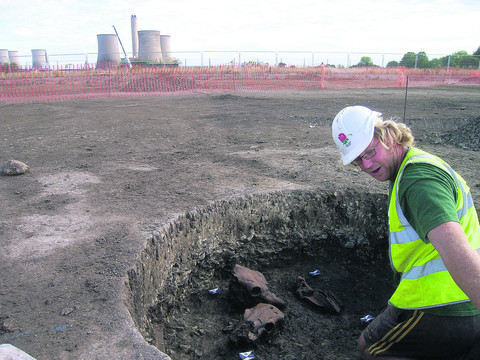
Archaeologists have proved for the first time that people started living in the Didcot area as early as 9,000 years ago.

UK dig discovers 9,000-year-old remains
View of the excavation site at Great Western Park [Credit: Herald Series]

Oxford Archaeology has been excavating land at Great Western Park, where more than 3,300 homes are being built, to detail the site’s history.

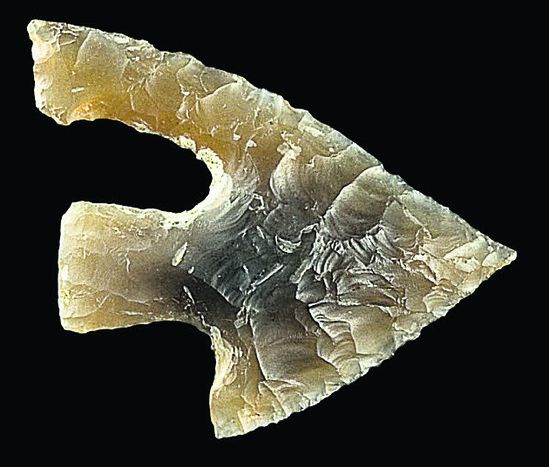
The two-and-a-half-year dig has uncovered the remains of a Roman villa, and early Bronze Age arrowheads which will now go on display.

Rob Masefield – director of archaeology at RPS Planning, which is managing the investigation – said one of the most important discoveries was hundreds of flints dating back over 9,000 years to the Mesolithic period.

He said: “There might have been one or two finds from the Mesolithic period in the past but they have not been scientifically dated in such a significant way before – these were working flints used around campfires about 9,000 years ago.

UK dig discovers 9,000-year-old remains
One of the flint arrowheads found at the dig [Credit: Herald Series]

“This is one of the largest and most significant archaeological projects to have taken place in Oxfordshire in recent years, with results providing a detailed historical narrative for Didcot and the surrounding area that extends back deep into prehistory.”

Oxford Archaeology project manager Steve Lawrence, who is based in Osney Mead, Oxford, added: “The site demonstrates about 1,000 years of continuous settlement.”

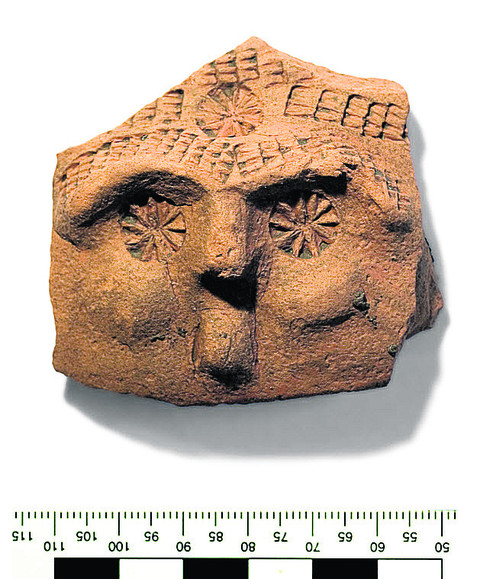
Key finds include Bronze Age arrowheads from a ceremonial pond barrow burial mound, and a piece of Roman pottery featuring a face design.

Investigations launched in 2011 unearthed early prehistoric finds including a complete Neolithic bowl of the earliest farmers, dating to about 3600 BC.

UK dig discovers 9,000-year-old remains
Part of a pottery figure [Credit: Herald Series]

And excavations last year revealed a rare example of a late Neolithic to early Bronze Age pond barrow, from about 2000 BC.

The dig also located a large hillcrest Iron Age settlement, west of Stephen Freeman Primary School, with up to 60 roundhouses.

There were also hundreds of grain storage pits, human burials, domestic rubbish, pottery dumps and animal bones.

The Cornerstone Arts Centre in Didcot is staging an exhibition about the dig, from February 7 to March 3.

Author: Andrew French | Source: Herald Series [January 22, 2013]


Harvard scientists were surprised that they saw a dramatic reversal, not just a slowing down, of the ageing in mice. Now they believe they might be able to regenerate human organs

Laboratory mouse in a scientist's hand

In mice, reactivating the enzyme telomerase led to the repair of damaged tissues and reversed the signs of ageing. Photograph: Robert F. Bukaty/AP

Scientists claim to be a step closer to reversing the ageing process after rejuvenating worn out organs in elderly mice. The experimental treatment developed by researchers at the Dana-Farber Cancer Institute, Harvard Medical School, turned weak and feeble old mice into healthy animals by regenerating their aged bodies.

The surprise recovery of the animals has raised hopes among scientists that it may be possible to achieve a similar feat in humans – or at least to slow down the ageing process.

An anti-ageing therapy could have a dramatic impact on public health by reducing the burden of age-related health problems, such as dementia, stroke and heart disease, and prolonging the quality of life for an increasingly aged population.

“What we saw in these animals was not a slowing down or stabilisation of the ageing process. We saw a dramatic reversal – and that was unexpected,” said Ronald DePinho, who led the study, which was published in the journal Nature.

“This could lead to strategies that enhance the regenerative potential of organs as individuals age and so increase their quality of life. Whether it serves to increase longevity is a question we are not yet in a position to answer.”

The ageing process is poorly understood, but scientists know it is caused by many factors. Highly reactive particles called free radicals are made naturally in the body and cause damage to cells, while smoking, ultraviolet light and other environmental factors contribute to ageing.

The Harvard group focused on a process called telomere shortening. Most cells in the body contain 23 pairs of chromosomes, which carry our DNA. At the ends of each chromosome is a protective cap called a telomere. Each time a cell divides, the telomeres are snipped shorter, until eventually they stop working and the cell dies or goes into a suspended state called “senescence”. The process is behind much of the wear and tear associated with ageing.

At Harvard, they bred genetically manipulated mice that lacked an enzyme called telomerase that stops telomeres getting shorter. Without the enzyme, the mice aged prematurely and suffered ailments, including a poor sense of smell, smaller brain size, infertility and damaged intestines and spleens. But when DePinho gave the mice injections to reactivate the enzyme, it repaired the damaged tissues and reversed the signs of ageing.

“These were severely aged animals, but after a month of treatment they showed a substantial restoration, including the growth of new neurons in their brains,” said DePinho.

Repeating the trick in humans will be more difficult. Mice make telomerase throughout their lives, but the enzyme is switched off in adult humans, an evolutionary compromise that stops cells growing out of control and turning into cancer. Raising levels of telomerase in people might slow the ageing process, but it makes the risk of cancer soar.

DePinho said the treatment might be safe in humans if it were given periodically and only to younger people who do not have tiny clumps of cancer cells already living, unnoticed, in their bodies.

David Kipling, who studies ageing at Cardiff University, said: “The goal for human tissue ‘rejuvenation’ would be to remove senescent cells, or else compensate for the deleterious effects they have on tissues and organs. Although this is a fascinating study, it must be remembered that mice are not little men, particularly with regard to their telomeres, and it remains unclear whether a similar telomerase reactivation in adult humans would lead to the removal of senescent cells.”

Lynne Cox, a biochemist at Oxford University, said the study was “extremely important” and “provides proof of principle that short-term treatment to restore telomerase in adults already showing age-related tissue degeneration can rejuvenate aged tissues and restore physiological function.”

DePinho said none of Harvard’s mice developed cancer after the treatment. The team is now investigating whether it extends the lifespan of mice or enables them to live healthier lives into old age.

Tom Kirkwood, director of the Institute for Ageing and Health at Newcastle University, said: “The key question is what might this mean for human therapies against age-related diseases? While there is some evidence that telomere erosion contributes to age-associated human pathology, it is surely not the only, or even dominant, cause, as it appears to be in mice engineered to lack telomerase. Furthermore, there is the ever-present anxiety that telomerase reactivation is a hallmark of most human cancers.”

The Guardian.co.uk


Brain

The idea of the universe as a ‘giant brain’ has been proposed by scientists – and science fiction writers – for decades.

But now physicists say there may be some evidence that it’s actually true. In a sense.

According to a study published in Nature’s Scientific Reports, the universe may be growing in the same way as a giant brain – with the electrical firing between brain cells ‘mirrored’ by the shape of expanding galaxies.

The results of a computer simulation suggest that “natural growth dynamics” – the way that systems evolve – are the same for different kinds of networks – whether its the internet, the human brain or the universe as a whole.

A co-author of the study, Dmitri Krioukov from the University of California San Diego, said that while such systems appear very different, they have evolved in very similar ways.

The result, they argue, is that the universe really does grow like a brain.

The study raises profound questions about how the universe works, Krioukov said.

“For a physicist it’s an immediate signal that there is some missing understanding of how nature works,” he told Space.com.

The team’s simulation modelled the very early life of the universe, shortly after the big bang, by looking at how quantum units of space-time smaller than subatomic particles ‘networked’ with each other as the universe grew.

They found that the simulation mirrored that of other networks. Some links between similar nodes resulted in limited growth, while others acted as junctions for many different connections.

For instance, some connections are limited and similar – like a person who likes sports visiting many other sports websites – and some are major and connect to many other parts of the network, like Google and Yahoo.

No, it doesn’t quite mean that the universe is ‘thinking’ – but as has been previously pointed out online, it might just mean there’s more similarity between the very small and the very large than first appearances suggest.

Huffington Post UK  |  By Michael Rundle

MessageToEagle.com – Have you ever felt strange without really knowing why shortly after a solar entered Earth’s atmosphere?

According to scientists, solar flares do cause changes in human health.

A solar flare is an explosion on the Sun that happens when energy stored in twisted magnetic fields is suddenly released. Such intense activity has influence on our mind and body. More and more scientists are now convinced that our Sun affects our mental and physical health.

The Sun’s activity as it interacts with the Earths magnetic field, effects extensive changes in human beings perspectives, moods, emotions and behavioral patterns.

“The idea that spots on the sun or solar flares might influence human health on earth at first appears to lack scientific credibility.

However, when significant correlations between hospital admissions and health registers and Solar-Geomagnetic Activity (S-GMA) are found, then the challenge is to conceive of and to document a scientifically plausible and observationally supported mechanism and model. There is a large body of research correlating S-GMA with biological effects and human health effects.

There is currently an absence of a known and credible biophysical mechanism to link the S-GMA with these effects,” writes Dr Neil Cherry Associate Professor of Environmental Health at the Lincoln University in his science paper.

In Dr. Neil Cherry’s opinion it is possible that that the Schumann Resonance (SR) signal is the plausible biophysical mechanism to link the S-GMA levels to biological and human health effects.

The Schumann resonances (SR) are a set of spectrum peaks in the extremely low frequency (ELF) portion of the Earth’s electromagnetic field spectrum.

Schumann resonances are global electromagnetic resonances, excited by lightning discharges in the cavity formed by the Earth’s surface and the ionosphere.

The Institute of North Industrial Ecology Problems in Russia measured solar effects from 1948 to 1997 and discovered that geomagnetic activity showed three seasonal peaks each of those years (March to May, in July, and in October).

Every peak matched an increased incidence of anxiety, depression, bipolar disorder, and suicide in the city Kirovsk.

This led scientist to believe that solar storms desynchronize our circadian rhythm, in other words our biological clock. The pineal gland in our brain is affected by the electromagnetic activity.

This causes the gland to produce excess melatonin, and melatonin is the brain’s built in “downer” that helps us sleep.

Solar flares can be very powerful. Our planet is very small compared to large solar flares.

“The circadian regulatory system depends on repeated environmental cues to [synchronize] internal clocks,” says psychiatrist Kelly Posner, Columbia University. “Magnetic fields may be one of these environmental cues.”

Psychological effects of coronal mass ejections can result in headache, palpitations, mood swings, and feeling generally unwell. Chaotic or confused thinking and erratic behaviors also increase.

According to Professor Raymond Wheeler of the University of Kansas and Russian scientist Alexander Chizhevsky solar storms cab directly cause conflict, wars and even death among humans on Earth.

Wheeler expanded on Chishevsky’s work by studying violence during 1913; measuring the time between battles and severity. These findings were compared with the suns 11 year sunspot cycle.

The results showed that as the sun cycle peaked, there was a rise in human unrest, uprisings, rebellions, revolutions, and wars between nations. As the magnetic fields intensified, the reaction within the human brain was a mixture of deadly emotional tantrums and unadulterated killing sprees.

As Wheeler further compared his findings with human history, he found a startling pattern that could be traced back 2,500 years.

From a scientific point of view it is clear that solar flares can affect our health and cause changes in our mind and body.

MessageToEagle.com

Eight million dog mummies found in Saqqara

Posted: January 8, 2013 by phaedrap1 in News, Science
Tags: ,
Eight million dog mummies were uncovered at the dog catacomb in Saqqara
Ikram with a dog mummy. photo courtesy of NG

During routine excavations at the dog catacomb in Saqqara necropolis, an excavation team led by Salima Ikram, professor of Egyptology at The American University in Cairo (AUC), and an international team of researchers led by Paul Nicholson of Cardiff University have uncovered almost 8 million animal mummies at the burial site.

Studies on their bones revealed that those dogs are from different breeds but not accurately identified yet.

“We are recording the animal bones and the mummification techniques used to prepare the animals,” Ikram said.

Studies on the mummies, Ikram explains, revealed that some of them were old while the majority were buried hours after their birth. She said that the mummified animals were not limited to canines but there are cat and mongoose remains in the deposit.

“We are trying to understand how this fits religiously with the cult of Anubis, to whom the catacomb is dedicated,” she added.

Ikram also told National Geographic, which is financing the project, that “in some churches people light a candle, and their prayer is taken directly up to God in that smoke. In the same way, a mummified dog’s spirit would carry a person’s prayer to the afterlife”.

Saqqara dog catacomb was first discovered in 1897 when well-known French Egyptologist Jacques De Morgan published his Carte of Memphite necropolis, with his map showing that there are two dog catacombs in the area.

However, mystery has overshadowed such mapping as it was not clear who was the first to discover the catacombs nor who carried out the mapping, and whether they were really for dogs.

“The proximity of the catacombs to the nearby temple of Anubis, the so called jackal or dog-headed deity associated with cemeteries and embalming makes it likely that these catacombs are indeed for canines and their presence at Saqqara is to be explained by the concentration of other animal cuts at the site,” Nicholson wrote on his website.

“These other cults include the burials of, and temples for, bulls, cows, baboons, ibises, hawks and cats all of which were thought to act as intermediaries between humans and their gods.”

Despite the great quantity of animals buried in these catacombs and the immense size of the underground burial places, Egyptologists have focused on the temples and on inscriptional evidence rather than on the animals themselves and their places of burial.

The mysteries behind De Morgan’s mapping were unsolved until 2009 when this team started concrete excavations at the cemetery in an attempt to learn more about the archaeological and history of the site.

“Results at the first season showed that De Morgan map has substantial inaccuracies and a new survey is under way,” Nicholson said.

“The animal bones themselves have been sampled and preliminary results suggest that as well as actual dogs there may be other canids present. Furthermore the age profile of the animals is being examined so that patterns of mortality can be ascertained.”

Nevine El-Aref

Ahramonline