Archive for the ‘News’ Category

Image: Tlaloc
Archaeologists surprised to find 150 skulls lined up in the middle of nowhere
Archaeologists have unearthed a trove of skulls in Mexico that may have once belonged to human sacrifice victims. The skulls, which date between the year 600 and 850, may also shatter existing notions about the ancient culture of the area.

The find, described in the January issue of the journal Latin American Antiquity, was located in an otherwise empty field that once held a vast lake, but was miles from the nearest major city of the day, said study co-author Christopher Morehart, an archaeologist at Georgia State University.

“It’s absolutely remarkable to think about this little nothing on the landscape having potentially evidence of the largest mass human sacrifice in ancient Mesoamerica,” Morehart said.

Middle of nowhere
Morehart and his colleagues were using satellite imagery to map ancient canals, irrigation channels and lakes that used to surround the kingdom of Teotihuacan (home to the Pyramid of the Sun), about 30 miles (50 kilometers) from Mexico City. The vast ancient kingdom flourished from around the year 200 to 650, though who built it remains a mystery. [In Photos: Amazing Ruins of the Ancient World]

In a now-drained lake called Lake Xaltocan, around which was essentially rural farmland at the time, Morehart stumbled upon a site with evidence of looting.

When the team investigated, they discovered lines of human skulls with just one or two vertebra attached. To date, more than 150 skulls have been discovered there. The site also contained a shrine with incense burners, water-deity figurines and agricultural pottery, such as corncob depictions, suggesting a ritual purpose tied to local farming. [See images from the grisly excavation]

Carbon dating suggested that the skulls were at least 1,100 years old, and the few dozen analyzed so far are mostly from men, Morehart told LiveScience. The researchers did not release photos of the skulls because the sacrifice victims may have historic ties to modern-day indigenous cultures.

The findings shake up existing notions of the culture of the day, because the site is not associated with Teotihuacan or other regional powers, said Destiny Crider, an archaeologist at Luther College in Iowa, who was not involved in the study.

Big event in a little place
Human sacrifice was practiced throughout the region, both at Teotihuacan and in the later Aztec Empire, but most of those rituals happened at great pyramids within cities and were tied to state powers.

By contrast, “this one is a big event in a little place,” Crider said.

The shrines and the fact that sacrifice victims were mostly male suggest that they were carefully chosen, not simply the result of indiscriminate slaughter of a whole village, Crider told LiveScience.

Many researchers believe that massive drought caused the fall of Teotihuacan and ushered in a period of warfare and political infighting as smaller regional powers sprang up, Morehart said. Crider said those tumultuous times could have spurred innovative — and bloody — practices.

“Maybe they needed to intensify their activities because everything was changing,” she said. “When things are uncertain, you try new strategies.

By Tia Ghose

UK dig discovers 9,000-year-old remains

Posted: January 22, 2013 by phaedrap1 in News, Science
Tags: ,


Archaeologists have proved for the first time that people started living in the Didcot area as early as 9,000 years ago.

UK dig discovers 9,000-year-old remains
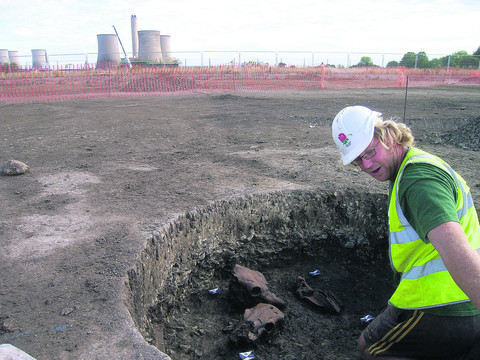
View of the excavation site at Great Western Park [Credit: Herald Series]

Oxford Archaeology has been excavating land at Great Western Park, where more than 3,300 homes are being built, to detail the site’s history.

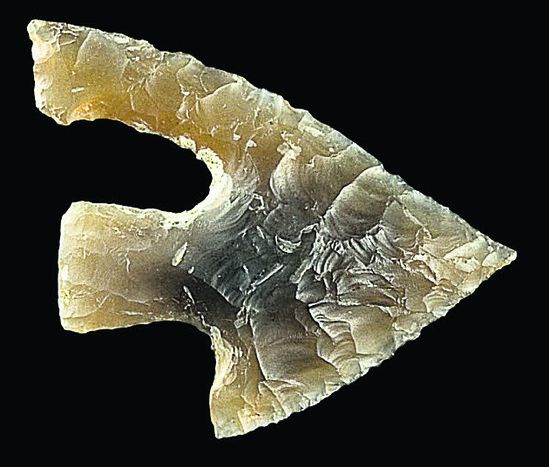
The two-and-a-half-year dig has uncovered the remains of a Roman villa, and early Bronze Age arrowheads which will now go on display.

Rob Masefield – director of archaeology at RPS Planning, which is managing the investigation – said one of the most important discoveries was hundreds of flints dating back over 9,000 years to the Mesolithic period.

He said: “There might have been one or two finds from the Mesolithic period in the past but they have not been scientifically dated in such a significant way before – these were working flints used around campfires about 9,000 years ago.

UK dig discovers 9,000-year-old remains
One of the flint arrowheads found at the dig [Credit: Herald Series]

“This is one of the largest and most significant archaeological projects to have taken place in Oxfordshire in recent years, with results providing a detailed historical narrative for Didcot and the surrounding area that extends back deep into prehistory.”

Oxford Archaeology project manager Steve Lawrence, who is based in Osney Mead, Oxford, added: “The site demonstrates about 1,000 years of continuous settlement.”

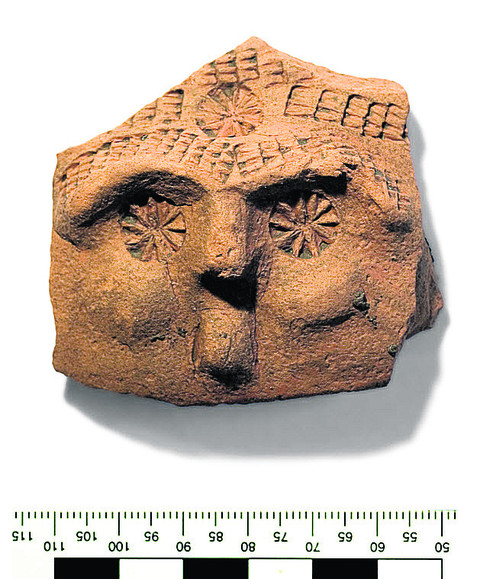
Key finds include Bronze Age arrowheads from a ceremonial pond barrow burial mound, and a piece of Roman pottery featuring a face design.

Investigations launched in 2011 unearthed early prehistoric finds including a complete Neolithic bowl of the earliest farmers, dating to about 3600 BC.

UK dig discovers 9,000-year-old remains
Part of a pottery figure [Credit: Herald Series]

And excavations last year revealed a rare example of a late Neolithic to early Bronze Age pond barrow, from about 2000 BC.

The dig also located a large hillcrest Iron Age settlement, west of Stephen Freeman Primary School, with up to 60 roundhouses.

There were also hundreds of grain storage pits, human burials, domestic rubbish, pottery dumps and animal bones.

The Cornerstone Arts Centre in Didcot is staging an exhibition about the dig, from February 7 to March 3.

Author: Andrew French | Source: Herald Series [January 22, 2013]


A restoration of the ancient Colosseum in Rome has revealed previously unseen red, blue and green frescoes, a world away from its famous monochrome facade.

Another discovery of the recent restoration of an internal passageway is a selection of graffiti and drawings of phallic symbols.

Experts believe some of the graffiti may date from the 3rd century, after the Colosseum was restored following a fire in AD 217.

Brightly coloured fragments of frescoes were found during a restoration of a passageway inside the ColosseumBrightly coloured fragments of frescoes were found during a restoration of a passageway inside the Colosseum

A restorer stands in front a wall with remains of frescoes and graffiti A restorer stands in front a wall with remains of frescoes and graffiti


The findings were part of a long-delayed restoration of Rome's ColosseumThe findings were part of a long-delayed restoration of Rome’s Colosseum

The findings paint an all together more colourful appearance than archeologists had previously thought of the famous 50,000-seat amphitheatre.

The discoveries were announced today, and officials have said the passageway will be open to the public later on this year.

The frescoes were found in a passageway situated between the second and third levels of the Colosseum.

This is the highest level of seating, and is a wooden gallery reserved for the lowest classes and furthest from the action in the arena.

Huge amounts of calcified rock and dirt had hidden the frescoes, which were revealed during a cleaning and restoration project, which began in November.

The ancient graffiti, seen here in red in the background, was another discovery of the restorationThe ancient graffiti, seen here in red in the background, was another discovery of the restoration


The frescoes were hidden under decades of calcified rock and grime, and were revealed after the surfaces were cleanedThe frescoes were hidden under decades of calcified rock and grime, and were revealed after the surfaces were cleaned

Archaeologist Alessandro Danesi shows brightly coloured fragments of frescoes inside a corridor of the ColosseumArchaeologist Alessandro Danesi shows brightly coloured fragments of frescoes inside a corridor of the Colosseum


The traces confirm that while the Colosseum today is known as a mix of monochrome gray rock, red brick and moss-covered marble, its interior halls used to be a multitude of colours.

THE COLOSSEUM

It was built between 72 and 80 AD and was originally used for gladiator contests, and re-enacting sea battles.

It was the largest ever built in the Roman Empire, and was built of concrete and stone.

In its heyday it could seat 50,000 spectators on three tiers of seating.

The building ceased to be used for entertainment in the early medieval era.

It was then used for a variety of purposes, including housing and and a Christian shrine.

The exterior of the building is visited by millions of tourists each year.

The team also discovered ancient sketches by spectators who painted crowns and palm trees, symbols of victory celebrating the success of gladiators they supported.

The Latin word ‘VIND’, referring to victory or revenge, was also found.

‘We’re used to thinking that during excavations, archaeological surprises are a risk for builders and for the city’s development,’ said Rome archaeological heritage superintendent Mariarosaria Barbera.

‘This is a beautiful archaeological surprise Even in a monument as well known as this one, studied all over the world, there are still new things to discover.’

Colosseum director Rosella Rea said less than one per cent of the painted surfaces of the Colosseum remain.

‘The insides, the galleries, all the corridors and transverse hallways were completely coloured. We need to imagine a building with extreme contrasts of colour, this was a surprise.’

A frescoe reading 'vind' was found - it means victory or revengeA frescoe reading ‘vind’ was found – it means victory or revenge


The traces confirmed that while the Colosseum today is a fairly monochrome colour, it used to have halls decked in colour The traces confirmed that while the Colosseum today is a fairly monochrome colour, it used to have halls decked in colour


Paul Milligan
MailOnline


There’s no official explanation yet of what people reported in the skies over Detroit last Thursday night.

“I’ve been watching the airplanes tonight and it wasn’t quite as high as them,” eyewitness David Levy told Fox 2 News. “You could actually see the triangle shape of the object.”

Levy was with a group of friends in Flat Rock around 9:30 p.m. on Jan. 10, according to Fox 2 News reporter Ron Savage. “In fact, our Fox 2 Facebook page has been blowing up with hundreds of posts on the subject,” Savage reported.

One Facebook poster named Shaun wrote: “They were black triangle-shaped objects making circles over West Bloomfield and Farmington Hills. There was no noise and they had bright lights. I’m not making this up and I know somebody else saw these things.”

Watch this Fox 2 News report about the Detroit UFOs

During the Fox 2 report, news anchor Huel Perkins said, “For years, the Air Force conducted an investigation of so-called UFOs. They found no official proof.”

Was he referring to the Air Force’s famous Project Blue Book, which ended a two-decade-long study of UFOs in 1969, concluding that five percent of the cases — approximately 700 sightings — investigated could not be easily explained away? What did Perkins mean when he said the Air Force “found no official proof”? Proof of what?

While Detroit-area observers wondered what those triangular shaped aerial objects were, also on Jan. 10, almost 20 miles north of Detroit, in Warren, Mich., an equally puzzling object was recorded on video.

As reported by Latest UFO Sightings, the bright lights on this object turned on and off, as it went through a variety of shapes, including a triangle.

Check out this UFO seen over Warren, Mich.

Michigan was home to one of the most infamous of all UFO sightings in history. In 1966, while he served as the official Air Force scientific advisor to Project Blue Book, astronomer J. Allen Hynek declared that a UFO sighting in Dexter, Mich., was probably caused by “swamp gas,” a term that would haunt Hynek for the rest of his life, and one which has often been cited around the world since then.

Hynek’s swamp gas theory even angered then-Michigan Congressman (and future president) Gerald R. Ford, who said in a 1966 radio broadcast, “I believe Congress should thoroughly investigate the rash of reported sightings of unidentified flying objects in southern Michigan and other parts of the country.

“I feel a congressional inquiry would be most worthwhile because the American people are intensely interested in the UFO stories, and some people are alarmed by them,” Ford said.

Almost 50 years later, not much has changed.


LUFOS.net / YouTube
By Lee Speigel

Harvard scientists were surprised that they saw a dramatic reversal, not just a slowing down, of the ageing in mice. Now they believe they might be able to regenerate human organs

Laboratory mouse in a scientist's hand

In mice, reactivating the enzyme telomerase led to the repair of damaged tissues and reversed the signs of ageing. Photograph: Robert F. Bukaty/AP

Scientists claim to be a step closer to reversing the ageing process after rejuvenating worn out organs in elderly mice. The experimental treatment developed by researchers at the Dana-Farber Cancer Institute, Harvard Medical School, turned weak and feeble old mice into healthy animals by regenerating their aged bodies.

The surprise recovery of the animals has raised hopes among scientists that it may be possible to achieve a similar feat in humans – or at least to slow down the ageing process.

An anti-ageing therapy could have a dramatic impact on public health by reducing the burden of age-related health problems, such as dementia, stroke and heart disease, and prolonging the quality of life for an increasingly aged population.

“What we saw in these animals was not a slowing down or stabilisation of the ageing process. We saw a dramatic reversal – and that was unexpected,” said Ronald DePinho, who led the study, which was published in the journal Nature.

“This could lead to strategies that enhance the regenerative potential of organs as individuals age and so increase their quality of life. Whether it serves to increase longevity is a question we are not yet in a position to answer.”

The ageing process is poorly understood, but scientists know it is caused by many factors. Highly reactive particles called free radicals are made naturally in the body and cause damage to cells, while smoking, ultraviolet light and other environmental factors contribute to ageing.

The Harvard group focused on a process called telomere shortening. Most cells in the body contain 23 pairs of chromosomes, which carry our DNA. At the ends of each chromosome is a protective cap called a telomere. Each time a cell divides, the telomeres are snipped shorter, until eventually they stop working and the cell dies or goes into a suspended state called “senescence”. The process is behind much of the wear and tear associated with ageing.

At Harvard, they bred genetically manipulated mice that lacked an enzyme called telomerase that stops telomeres getting shorter. Without the enzyme, the mice aged prematurely and suffered ailments, including a poor sense of smell, smaller brain size, infertility and damaged intestines and spleens. But when DePinho gave the mice injections to reactivate the enzyme, it repaired the damaged tissues and reversed the signs of ageing.

“These were severely aged animals, but after a month of treatment they showed a substantial restoration, including the growth of new neurons in their brains,” said DePinho.

Repeating the trick in humans will be more difficult. Mice make telomerase throughout their lives, but the enzyme is switched off in adult humans, an evolutionary compromise that stops cells growing out of control and turning into cancer. Raising levels of telomerase in people might slow the ageing process, but it makes the risk of cancer soar.

DePinho said the treatment might be safe in humans if it were given periodically and only to younger people who do not have tiny clumps of cancer cells already living, unnoticed, in their bodies.

David Kipling, who studies ageing at Cardiff University, said: “The goal for human tissue ‘rejuvenation’ would be to remove senescent cells, or else compensate for the deleterious effects they have on tissues and organs. Although this is a fascinating study, it must be remembered that mice are not little men, particularly with regard to their telomeres, and it remains unclear whether a similar telomerase reactivation in adult humans would lead to the removal of senescent cells.”

Lynne Cox, a biochemist at Oxford University, said the study was “extremely important” and “provides proof of principle that short-term treatment to restore telomerase in adults already showing age-related tissue degeneration can rejuvenate aged tissues and restore physiological function.”

DePinho said none of Harvard’s mice developed cancer after the treatment. The team is now investigating whether it extends the lifespan of mice or enables them to live healthier lives into old age.

Tom Kirkwood, director of the Institute for Ageing and Health at Newcastle University, said: “The key question is what might this mean for human therapies against age-related diseases? While there is some evidence that telomere erosion contributes to age-associated human pathology, it is surely not the only, or even dominant, cause, as it appears to be in mice engineered to lack telomerase. Furthermore, there is the ever-present anxiety that telomerase reactivation is a hallmark of most human cancers.”

The Guardian.co.uk


Brain

The idea of the universe as a ‘giant brain’ has been proposed by scientists – and science fiction writers – for decades.

But now physicists say there may be some evidence that it’s actually true. In a sense.

According to a study published in Nature’s Scientific Reports, the universe may be growing in the same way as a giant brain – with the electrical firing between brain cells ‘mirrored’ by the shape of expanding galaxies.

The results of a computer simulation suggest that “natural growth dynamics” – the way that systems evolve – are the same for different kinds of networks – whether its the internet, the human brain or the universe as a whole.

A co-author of the study, Dmitri Krioukov from the University of California San Diego, said that while such systems appear very different, they have evolved in very similar ways.

The result, they argue, is that the universe really does grow like a brain.

The study raises profound questions about how the universe works, Krioukov said.

“For a physicist it’s an immediate signal that there is some missing understanding of how nature works,” he told Space.com.

The team’s simulation modelled the very early life of the universe, shortly after the big bang, by looking at how quantum units of space-time smaller than subatomic particles ‘networked’ with each other as the universe grew.

They found that the simulation mirrored that of other networks. Some links between similar nodes resulted in limited growth, while others acted as junctions for many different connections.

For instance, some connections are limited and similar – like a person who likes sports visiting many other sports websites – and some are major and connect to many other parts of the network, like Google and Yahoo.

No, it doesn’t quite mean that the universe is ‘thinking’ – but as has been previously pointed out online, it might just mean there’s more similarity between the very small and the very large than first appearances suggest.

Huffington Post UK  |  By Michael Rundle

MessageToEagle.com – Have you ever felt strange without really knowing why shortly after a solar entered Earth’s atmosphere?

According to scientists, solar flares do cause changes in human health.

A solar flare is an explosion on the Sun that happens when energy stored in twisted magnetic fields is suddenly released. Such intense activity has influence on our mind and body. More and more scientists are now convinced that our Sun affects our mental and physical health.

The Sun’s activity as it interacts with the Earths magnetic field, effects extensive changes in human beings perspectives, moods, emotions and behavioral patterns.

“The idea that spots on the sun or solar flares might influence human health on earth at first appears to lack scientific credibility.

However, when significant correlations between hospital admissions and health registers and Solar-Geomagnetic Activity (S-GMA) are found, then the challenge is to conceive of and to document a scientifically plausible and observationally supported mechanism and model. There is a large body of research correlating S-GMA with biological effects and human health effects.

There is currently an absence of a known and credible biophysical mechanism to link the S-GMA with these effects,” writes Dr Neil Cherry Associate Professor of Environmental Health at the Lincoln University in his science paper.

In Dr. Neil Cherry’s opinion it is possible that that the Schumann Resonance (SR) signal is the plausible biophysical mechanism to link the S-GMA levels to biological and human health effects.

The Schumann resonances (SR) are a set of spectrum peaks in the extremely low frequency (ELF) portion of the Earth’s electromagnetic field spectrum.

Schumann resonances are global electromagnetic resonances, excited by lightning discharges in the cavity formed by the Earth’s surface and the ionosphere.

The Institute of North Industrial Ecology Problems in Russia measured solar effects from 1948 to 1997 and discovered that geomagnetic activity showed three seasonal peaks each of those years (March to May, in July, and in October).

Every peak matched an increased incidence of anxiety, depression, bipolar disorder, and suicide in the city Kirovsk.

This led scientist to believe that solar storms desynchronize our circadian rhythm, in other words our biological clock. The pineal gland in our brain is affected by the electromagnetic activity.

This causes the gland to produce excess melatonin, and melatonin is the brain’s built in “downer” that helps us sleep.

Solar flares can be very powerful. Our planet is very small compared to large solar flares.

“The circadian regulatory system depends on repeated environmental cues to [synchronize] internal clocks,” says psychiatrist Kelly Posner, Columbia University. “Magnetic fields may be one of these environmental cues.”

Psychological effects of coronal mass ejections can result in headache, palpitations, mood swings, and feeling generally unwell. Chaotic or confused thinking and erratic behaviors also increase.

According to Professor Raymond Wheeler of the University of Kansas and Russian scientist Alexander Chizhevsky solar storms cab directly cause conflict, wars and even death among humans on Earth.

Wheeler expanded on Chishevsky’s work by studying violence during 1913; measuring the time between battles and severity. These findings were compared with the suns 11 year sunspot cycle.

The results showed that as the sun cycle peaked, there was a rise in human unrest, uprisings, rebellions, revolutions, and wars between nations. As the magnetic fields intensified, the reaction within the human brain was a mixture of deadly emotional tantrums and unadulterated killing sprees.

As Wheeler further compared his findings with human history, he found a startling pattern that could be traced back 2,500 years.

From a scientific point of view it is clear that solar flares can affect our health and cause changes in our mind and body.

MessageToEagle.com

The sci-fi TV show Fringe often shows us an alternate, more technologically advanced version of Earth where airships are, for some reason, the norm. Now reality is mirroring fiction as a new project being developed in conjunction with the Pentagon is looking to bring airships back from their spotty past and into the future.

Developed by Aeroscraft, the 230-foot-long prototype airship called the Pelican is designed to lift up to 10 tons of cargo across long distances, using a fraction of the fuel needed by an airplane. The airship, which, interestingly, looks a lot like a flying saucer, has been in the works for several years under the guidance of the Pentagon’s Rapid Reaction Technology Office. In addition to cargo missions, the Pentagon also envisions the airship as a potential tool for surveillance and reconnaissance missions.The current prototype is much smaller than the final version of the airship the company plans to build which will be 450-feet long and have the ability to carry up to 66 tons of cargo. You can see footage of the Pelican being tested, as well as a presentation video depicting military uses for the airship in the videos below.

Aeroscraft, via AviationWeek


MessageToEagle.com – Over 300 clay figurines have been unearthed by archaeologists from the University of Southampton studying a Neolithic archaeological site of Koutroulou Magoula near the Greek village of Neo Monastiri, around 160 miles from Athens, Greece.

The preliminary excavations and geophysical survey have already revealed the presence of a number of large, stone-built houses, some with paved floors, which were built and rebuilt on the very same spot, over several generations.

Amongst the finds are plain and decorated pottery, stone and bone tools, figurines, animal and plant remains, human bones, and so on. The site is particularly rich in clay figurines (more than 200 to date), some anthropomorphic and some human-animal hybrids.


Small ceramic figurine recovered at the Koutroulou Magoula site. Credit: To Vima

Koutroulou Magoula was occupied during the Middle Neolithic period (c. 5800 – 5300 BC) by a community of a few hundred people who made architecturally sophisticated houses from stone and mud-bricks.


The figurines were found all over the site, with some located on wall foundations. It’s believed the purpose of figurines was not only as aesthetic art, but also to convey and reflect ideas about a community’s culture, society and identity.


“Figurines were thought to typically depict the female form, but our find is not only extraordinary in terms of quantity, but also quite diverse – male, female and non-gender specific ones have been found and several depict a hybrid human-bird figure,” says Professor Yannis Hamilakis, Co-Director of the Koutroulou Magoula Archaeology and Archaeological Ethnography project.

“We still have a lot of work to do studying the figurines, but they should be able to give us an enormous amount of information about how Neolithic people interpreted the human body, their own gender and social identity and experience.”

Excavations at Koutroulou Magoula were started in 2001 by Dr Nina Kyparissi (formerly Greek Archaeological Service) and this latest project began in 2010.


The site is roughly four times the area of a football pitch and consists of a mound up to 18 feet high featuring at least three terraces surrounded by ditches. The people who lived in the settlement appear to have rebuilt their homes on the same building footprint generation after generation, and there is also evidence that some of the houses were unusual in their construction.


Figurine found at the site depicting a hybrid human-bird character. Credit: To Vima

“This type of home would normally have stone foundations with mud-bricks on top, but our investigations at Koutroulou Magoula have found some preserved with stone walls up to a metre in height, suggesting that the walls may have been built entirely of stone, something not typical of the period,” Professor Hamilakis comments.


Credit: To Vima

“The people would have been farmers who kept domestic animals, used flint or obsidian1 tools and had connections with settlements in the nearby area. The construction of parts of the settlement suggests they worked communally, for example, to construct the concentric ditches surrounding their homes.

“There is no evidence of a central authority to date, yet large numbers of people were able to come together and carry out large communal and possibly socially beneficial projects.”


MessageToEagle.com

Eight million dog mummies found in Saqqara

Posted: January 8, 2013 by phaedrap1 in News, Science
Tags: ,
Eight million dog mummies were uncovered at the dog catacomb in Saqqara
Ikram with a dog mummy. photo courtesy of NG

During routine excavations at the dog catacomb in Saqqara necropolis, an excavation team led by Salima Ikram, professor of Egyptology at The American University in Cairo (AUC), and an international team of researchers led by Paul Nicholson of Cardiff University have uncovered almost 8 million animal mummies at the burial site.

Studies on their bones revealed that those dogs are from different breeds but not accurately identified yet.

“We are recording the animal bones and the mummification techniques used to prepare the animals,” Ikram said.

Studies on the mummies, Ikram explains, revealed that some of them were old while the majority were buried hours after their birth. She said that the mummified animals were not limited to canines but there are cat and mongoose remains in the deposit.

“We are trying to understand how this fits religiously with the cult of Anubis, to whom the catacomb is dedicated,” she added.

Ikram also told National Geographic, which is financing the project, that “in some churches people light a candle, and their prayer is taken directly up to God in that smoke. In the same way, a mummified dog’s spirit would carry a person’s prayer to the afterlife”.

Saqqara dog catacomb was first discovered in 1897 when well-known French Egyptologist Jacques De Morgan published his Carte of Memphite necropolis, with his map showing that there are two dog catacombs in the area.

However, mystery has overshadowed such mapping as it was not clear who was the first to discover the catacombs nor who carried out the mapping, and whether they were really for dogs.

“The proximity of the catacombs to the nearby temple of Anubis, the so called jackal or dog-headed deity associated with cemeteries and embalming makes it likely that these catacombs are indeed for canines and their presence at Saqqara is to be explained by the concentration of other animal cuts at the site,” Nicholson wrote on his website.

“These other cults include the burials of, and temples for, bulls, cows, baboons, ibises, hawks and cats all of which were thought to act as intermediaries between humans and their gods.”

Despite the great quantity of animals buried in these catacombs and the immense size of the underground burial places, Egyptologists have focused on the temples and on inscriptional evidence rather than on the animals themselves and their places of burial.

The mysteries behind De Morgan’s mapping were unsolved until 2009 when this team started concrete excavations at the cemetery in an attempt to learn more about the archaeological and history of the site.

“Results at the first season showed that De Morgan map has substantial inaccuracies and a new survey is under way,” Nicholson said.

“The animal bones themselves have been sampled and preliminary results suggest that as well as actual dogs there may be other canids present. Furthermore the age profile of the animals is being examined so that patterns of mortality can be ascertained.”

Nevine El-Aref

Ahramonline