 |
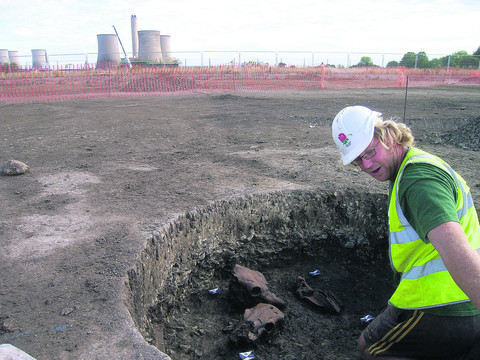
| View of the excavation site at Great Western Park [Credit: Herald Series] |
Oxford Archaeology has been excavating land at Great Western Park, where more than 3,300 homes are being built, to detail the site’s history.
The two-and-a-half-year dig has uncovered the remains of a Roman villa, and early Bronze Age arrowheads which will now go on display.
Rob Masefield – director of archaeology at RPS Planning, which is managing the investigation – said one of the most important discoveries was hundreds of flints dating back over 9,000 years to the Mesolithic period.
He said: “There might have been one or two finds from the Mesolithic period in the past but they have not been scientifically dated in such a significant way before – these were working flints used around campfires about 9,000 years ago.
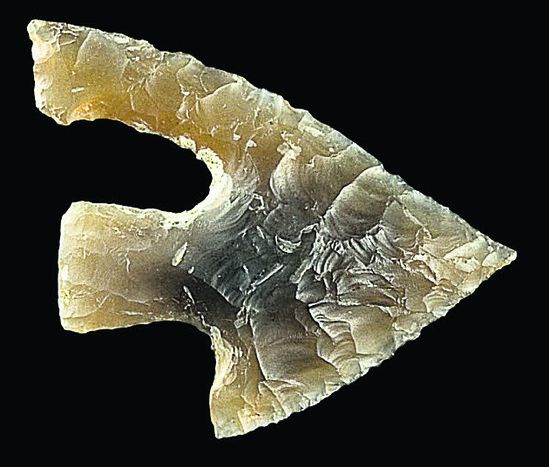 |
| One of the flint arrowheads found at the dig [Credit: Herald Series] |
“This is one of the largest and most significant archaeological projects to have taken place in Oxfordshire in recent years, with results providing a detailed historical narrative for Didcot and the surrounding area that extends back deep into prehistory.”
Oxford Archaeology project manager Steve Lawrence, who is based in Osney Mead, Oxford, added: “The site demonstrates about 1,000 years of continuous settlement.”
Key finds include Bronze Age arrowheads from a ceremonial pond barrow burial mound, and a piece of Roman pottery featuring a face design.
Investigations launched in 2011 unearthed early prehistoric finds including a complete Neolithic bowl of the earliest farmers, dating to about 3600 BC.
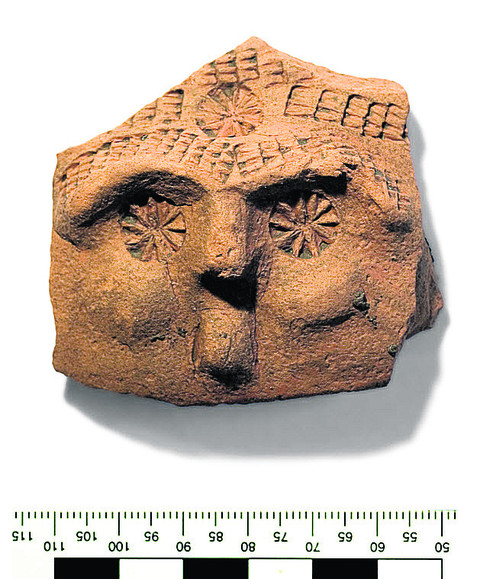 |
| Part of a pottery figure [Credit: Herald Series] |
And excavations last year revealed a rare example of a late Neolithic to early Bronze Age pond barrow, from about 2000 BC.
The dig also located a large hillcrest Iron Age settlement, west of Stephen Freeman Primary School, with up to 60 roundhouses.
There were also hundreds of grain storage pits, human burials, domestic rubbish, pottery dumps and animal bones.
The Cornerstone Arts Centre in Didcot is staging an exhibition about the dig, from February 7 to March 3.
Author: Andrew French | Source: Herald Series [January 22, 2013]
 Brightly coloured fragments of frescoes were found during a restoration of a passageway inside the Colosseum
 A restorer stands in front a wall with remains of frescoes and graffiti
 The findings were part of a long-delayed restoration of Rome’s Colosseum
 The ancient graffiti, seen here in red in the background, was another discovery of the restoration
 The frescoes were hidden under decades of calcified rock and grime, and were revealed after the surfaces were cleaned
 Archaeologist Alessandro Danesi shows brightly coloured fragments of frescoes inside a corridor of the Colosseum
 A frescoe reading ‘vind’ was found – it means victory or revenge
 The traces confirmed that while the Colosseum today is a fairly monochrome colour, it used to have halls decked in colour


 Small ceramic figurine recovered at the Koutroulou Magoula site. Credit: To Vima
 Figurine found at the site depicting a hybrid human-bird character. Credit: To Vima
 Credit: To Vima


 anunnaki,alien gods and spirituality